
Timpano 7 band equalizer
4.6Editor score
Seven band graphic EQ
High level input built-in
Slim compact design
Discover the top 10 Line Driver Car Audio Options for October 2026. We compare features, performance, and compatibility to help you upgrade your system.
Upgrading your factory car audio system often requires a line driver to ensure clean signal transmission to amplifiers. These devices boost weak signals from OEM radios to levels that aftermarket gear can use effectively without distortion or noise issues.
We evaluated ten top-rated line drivers based on voltage output, signal-to-noise ratios, build quality, and ease of installation. Our comparison includes models from leading brands like AudioControl, DS18, and Soundstream to cover various budgets and vehicle types.
Each pick highlights key strengths, ideal use cases, and technical specifications to guide your decision. Please note that pricing and availability may fluctuate over time, so always verify current details before purchasing any audio component for your vehicle.
4.6Editor score
4.8Editor score

4.5Editor score
This side-by-side comparison breaks down the technical capabilities and unique features of each selected line driver. From voltage output to EQ capabilities, see how these units stack up against one another for your specific audio upgrade needs.



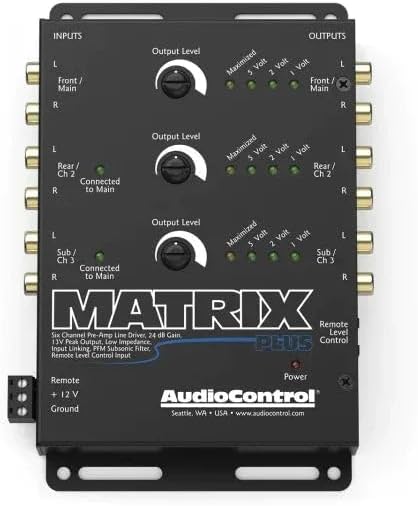
The AudioControl Matrix Plus stands out as a top-tier solution for complex audio systems needing robust signal processing. With a 4.5-star rating, it delivers exceptional performance for enthusiasts wanting maximum flexibility in their vehicle sound setup.
We may earn a commission when you buy through this link, at no additional cost to you.
Its six-channel architecture allows for precise separation of front, rear, and subwoofer signals. The ultra-low distortion rating ensures that every nuance in your music reaches your amplifiers without coloration, while the 13V peak output guarantees ample headroom.
Although it comes at a higher price, the investment pays off in build quality and performance. The programmable subsonic filter protects your woofers, though users should note the optional remote requires a separate purchase for front-seat control.
Ideal for high-end custom builds, this driver ensures your amplifiers receive clean, high-voltage signals. If you need multi-zone control and pristine sound quality, the Matrix Plus is the definitive choice for serious car audio enthusiasts.
Each of the six channels operates independently, allowing you to tailor gains and filters for every speaker in your system without compromising other zones.
The conformal coating on the PCB resists moisture and dust, ensuring long-term reliability even in vehicles exposed to extreme temperature swings or road debris.
We may earn a commission when you buy through this link, at no additional cost to you.
The AudioControl LC1i offers a straightforward way to add an amplifier to factory systems while retaining original features. Its high rating reflects ease of use and reliable performance in modern vehicles with complex electronics.
We may earn a commission when you buy through this link, at no additional cost to you.
Load selection switches ensure that factory amplifiers continue to function correctly, which is critical for cars with active safety features tied to audio systems. The line driver boosts signals effectively to drive aftermarket subs cleanly.
It lacks equalization features, so it relies on your head unit or external processor for tone shaping. However, for pure signal conversion and boosting, it remains a go-to option for its simplicity and compact design.
Best for those wanting a plug-and-play solution without sacrificing factory functionality. If you need a clean signal path for a subwoofer in a late-model car, the LC1i delivers consistent results.
By mimicking speaker loads, the LC1i prevents the factory head unit from cutting off audio or throwing errors when aftermarket components are added to the circuit.
Optional dash knobs can be added for volume or subwoofer control, giving you user-friendly adjustments from your seat without running new wires back to the trunk.
We may earn a commission when you buy through this link, at no additional cost to you.
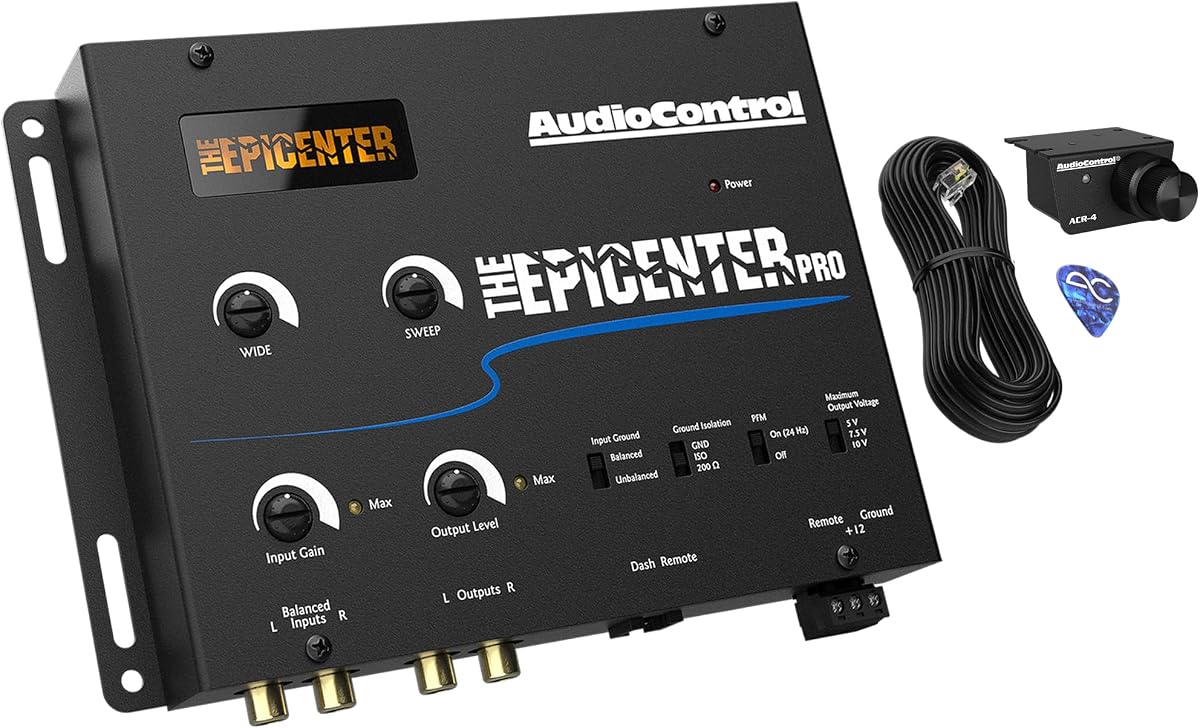
The AudioControl EPICENTER PRO is unmatched for adding deep, chest-thumping bass to compressed audio tracks. Its unique restoration circuit synthesizes low frequencies from higher harmonics, creating a full sound even without large subs.
We may earn a commission when you buy through this link, at no additional cost to you.
Users love the included remote and the ability to sweep frequencies to match their vehicle's resonance points. The high signal-to-noise ratio ensures that this added bass does not introduce unwanted hiss or noise into the mix.
Setup involves tuning specific bands, which can be daunting for beginners, but the results justify the effort. It is more than a simple driver; it is a complete tool for fixing weak OEM systems.
Perfect for systems where factory speakers lack low-end response. If you want to transform thin stock audio into a rich experience, this processor delivers the impact you crave.
The processor analyzes high-frequency harmonics in your audio to recreate the missing fundamental low frequencies, effectively restoring the bass that was lost in digital compression.
Adjustable center frequency and width controls allow you to target the exact resonant frequency of your car cabin, ensuring maximum impact without muddying the mid-range.
We may earn a commission when you buy through this link, at no additional cost to you.
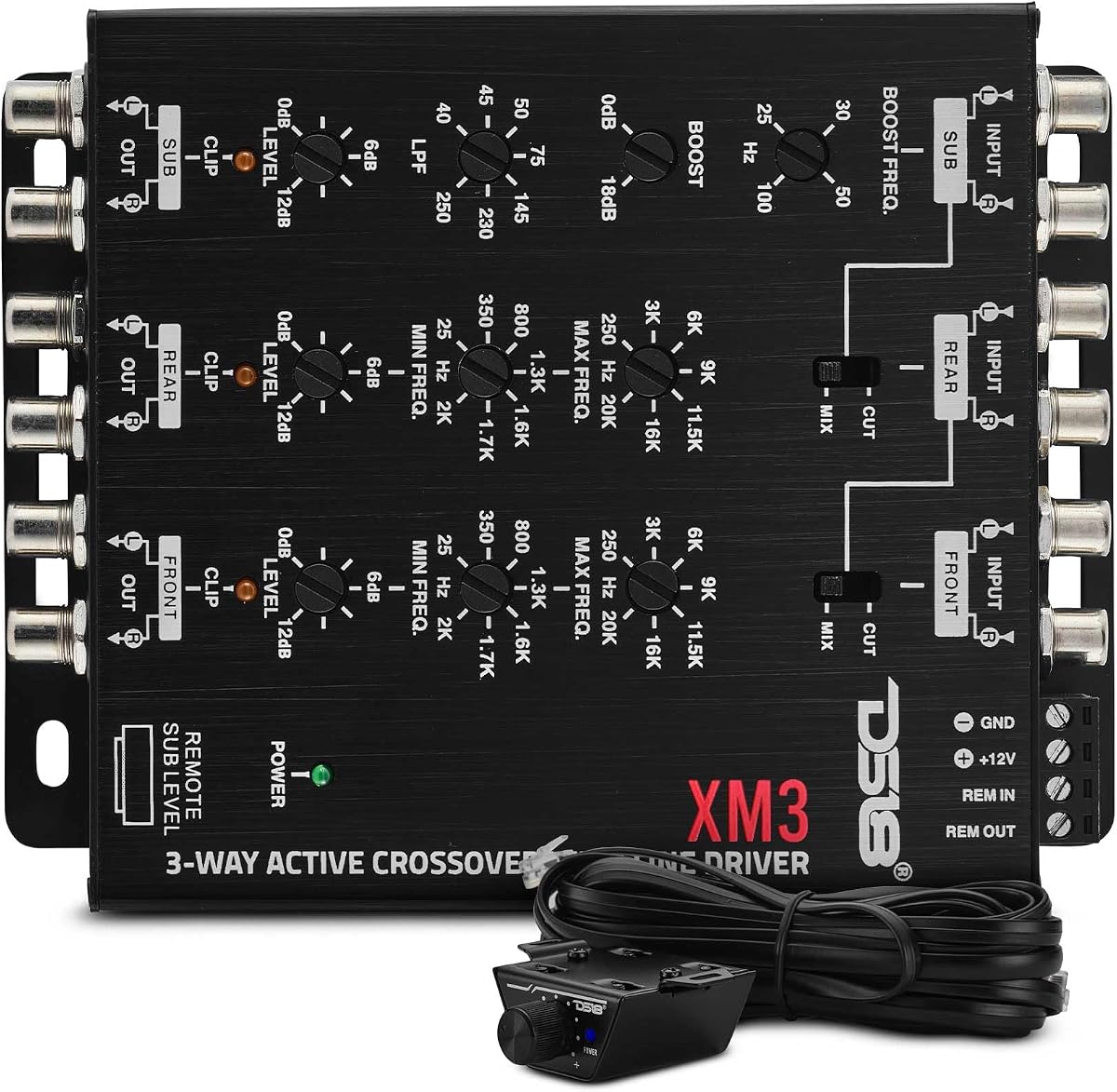
The DS18 XM3 provides active crossover control alongside a strong line driver. It lets you shape front, rear, and subwoofer signals independently with precision filters for a balanced soundstage.
We may earn a commission when you buy through this link, at no additional cost to you.
Its 11V output is sufficient for most modern amplifiers, reducing the risk of noise. The included remote subwoofer controller adds convenience, allowing you to adjust bass levels on the fly without touching the unit.
While it received slightly lower ratings due to complexity and price, its features are robust. Users value the Tiffany connectors for reliable signal transfer, though installation may require more time than simpler converters.
Ideal for DIY enthusiasts who want active control over their sound frequency bands. If you need distinct tuning for different speaker zones, this crossover offers the necessary tools for a clean split.
Unlike passive units, the active design ensures sharp frequency separation without signal loss, allowing each amplifier to operate efficiently within its specific frequency range.
The remote clip indicator warns you when levels are too high, preventing distortion and protecting your speakers by showing when you are pushing the signal into clipping.
We may earn a commission when you buy through this link, at no additional cost to you.
The Timpano 7 Band EQ offers incredible value by combining equalization with a high-voltage line driver. It is an excellent choice for budget-conscious builders who still want precise tone shaping.
We may earn a commission when you buy through this link, at no additional cost to you.
Its high level input makes it easy to connect to factory radios without a converter, while the 10V output ensures clean signal delivery. The slim profile fits easily behind dash panels, keeping the install neat.
The sliders are intuitive but not as precise as parametric units. For general tuning, however, it handles the job well. Users appreciate the ability to boost specific bands without needing complex programming.
Perfect for entry-level upgrades needing more tone control. If you want to adjust bass or treble without spending a fortune, this EQ delivers solid performance for a fraction of the cost.
The 10V high voltage output ensures that even long wire runs do not introduce noise, maintaining signal integrity from the head unit to the amplifier.
With a very low mounting depth, this unit tucks neatly into tight spaces, ensuring that you do not sacrifice dashboard storage to improve your audio quality.
We may earn a commission when you buy through this link, at no additional cost to you.
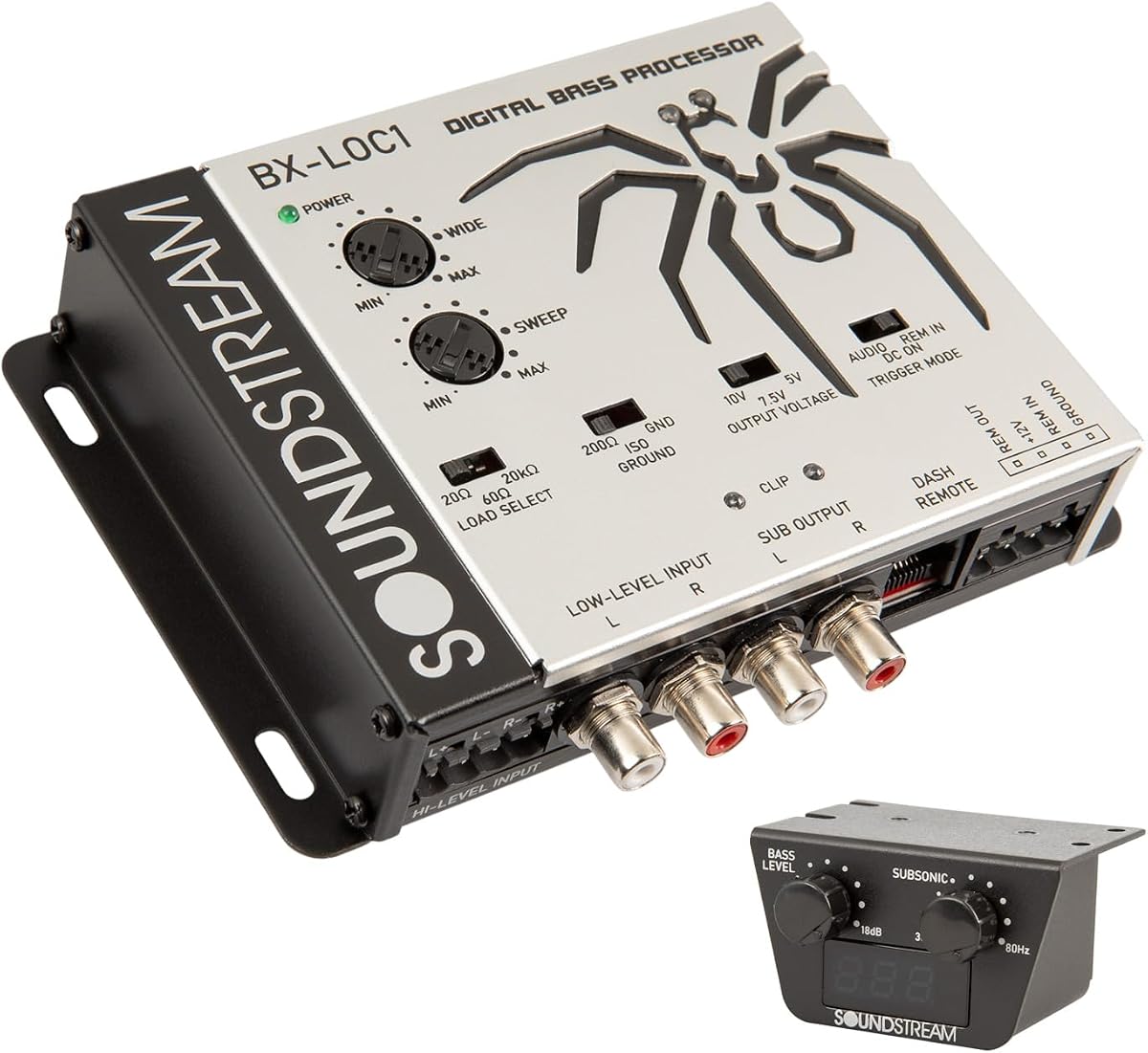
The Soundstream BX-LOC1 focuses on restoring low-end impact to compressed audio. It combines line conversion with bass processing to deliver a fuller sound from factory systems without external processors.
We may earn a commission when you buy through this link, at no additional cost to you.
Its 9V output ensures clean signals for amplifiers, while the impedance matching helps integrate with OEM systems seamlessly. The compact footprint makes installation easy, fitting in tight spots under seats or behind dashboards.
While it lacks deep EQ options, it covers the basics well. Users appreciate the LED indicators for clipping, which help avoid distortion during loud listening sessions. It is a straightforward solution for quick upgrades.
Best for those needing a simple plug-and-play solution. If you want to add bass and convert signals in one device without complex wiring, the BX-LOC1 provides reliable performance.
By matching impedances between your factory system and aftermarket gear, this unit prevents signal loss and ensures your car computer sees a normal load.
Premium shielding inside the chassis protects against engine whine and interference, ensuring that your music stays clean and free from unwanted hum.
We may earn a commission when you buy through this link, at no additional cost to you.
The AudioControl LC2i is a trusted workhorse for converting speaker-level signals to RCA line level. Its AccuBASS technology restores bass roll-off that often occurs at higher volumes on factory radios.
We may earn a commission when you buy through this link, at no additional cost to you.
It retains steering wheel controls and factory features, which is crucial for modern vehicles. The compact design includes mounting brackets, making it easy to secure in place without cluttering your trunk.
While it does not offer remote subwoofer controls out of the box, you can add them separately. It prioritizes clean signal conversion and reliability over advanced processing features, fitting many daily drivers.
Ideal for standard upgrades needing AccuBASS correction. If your factory system loses bass as volume increases, this unit will help you maintain a full sound at all levels.
This technology detects volume increases and adjusts the signal to restore low frequencies that factory systems often cut at high levels, keeping sound quality consistent.
By correctly handling factory signals, it allows your steering wheel volume and track buttons to work perfectly, preserving key convenience features during your audio upgrade.
We may earn a commission when you buy through this link, at no additional cost to you.
The Wavtech linkDQ integrates a parametric EQ into a compact line driver. This allows for precise correction of frequency deficiencies without needing a separate equalizer in your system.
We may earn a commission when you buy through this link, at no additional cost to you.
Its RJ45 port makes future upgrades simple, letting you add remote controls later. The auto turn-on feature ensures it powers up with your audio, while OEM load detect maintains factory functionality.
Though it requires some learning to tune correctly, the flexibility is unmatched in its class. Users praise its stability and the ability to tailor exact frequencies to their vehicle's acoustic profile.
Best for technical users wanting precise tuning. If you need a specific frequency fix and want to expand control later, this unit offers the right tools for professional results.
Unlike graphic EQs, the parametric control allows you to select exact center frequencies and bandwidths, letting you correct specific problem notes without affecting others.
The RJ45 port allows you to plug in a remote controller later without rewiring, making this a smart choice for installations where convenience might be added later.
We may earn a commission when you buy through this link, at no additional cost to you.
The AudioControl Epicenter Micro PRO delivers premium bass restoration in a tiny chassis. It combines high-voltage line driving with bass enhancement, making it perfect for systems where space is at a premium.
We may earn a commission when you buy through this link, at no additional cost to you.
Its performance matches larger units with 10V+ output and a 105dB signal-to-noise ratio. The included ACR-4 remote gives full control from the driver seat, ensuring you can adjust bass levels on the fly.
Though it comes with a higher price tag, the build quality and features justify the cost. It is ideal for high-end builds where every inch counts and top-tier sound quality is non-negotiable.
Best for premium builds needing maximum flexibility. If you want powerful bass restoration in a small package that handles high-level inputs without fuss, the Micro PRO is worth the investment.
Designed to fit in the smallest spaces, this unit does not compromise on power despite its tiny dimensions, letting you upgrade sound without sacrificing trunk space.
With 10V+ output capability, it ensures your amplifiers get the cleanest signal possible, driving them hard for maximum power without distortion or noise interference.
We may earn a commission when you buy through this link, at no additional cost to you.
The older AudioControl Matrix Plus provides six-channel control at a lower price. While ratings vary, it still offers essential features like LED indicators and high gain for basic multi-zone setups.
We may earn a commission when you buy through this link, at no additional cost to you.
It is a good fallback if you need multiple outputs but cannot afford newer models. The top-mounted controls make adjustments quick, though the performance may not match the latest revisions.
Users should consider this if budget is the main constraint. It works for simpler setups, but those seeking ultra-low distortion or advanced features may prefer newer alternatives with higher stability.
Best for budget multi-channel setups. If you need basic gain control and indicators without paying a premium, this older model provides a solid entry point for audio enthusiasts.
Offering a lower entry cost, this model allows more systems to gain multi-channel separation without breaking the bank, though it may lack some refined features of newer units.
LED indicators on the top show voltage levels at a glance, helping you quickly verify that your system is outputting optimal signal levels during installation and tuning.
We may earn a commission when you buy through this link, at no additional cost to you.
Choosing the right line driver depends on your system's complexity, the age of your factory radio, and your desire for tone shaping.
Higher voltage output ensures that your amplifier receives a strong signal to drive speakers cleanly. Look for units offering 9V to 13V peak to avoid distortion at high volumes.
Higher voltage means better headroom for your amp to deliver power without noise or signal degradation.
Determine how many independent zones you need. A six-channel driver allows separate control for front, rear, and multiple subwoofers, while two-channel suits simpler subwoofer additions.
More channels provide greater flexibility for complex custom installations requiring precise signal separation.
Some line drivers include bass restoration technology to synthesize low frequencies from existing audio. This is vital if your factory radio compresses low-end frequencies heavily.
Restoration features transform thin factory sound into rich, deep bass without needing larger subwoofers.
Check if the unit includes EQ features. Parametric or graphic EQ allows you to tune specific frequencies, while basic units may lack tone-shaping capabilities entirely.
Built-in EQ reduces the need for extra components, keeping your system cleaner and more integrated.
Consider whether the unit requires external wiring or offers plug-and-play convenience. Look for high-level inputs if you want to connect directly to speaker wires.
Simpler installation means less time spent under dashboards and fewer points of failure in your wiring.
Durability matters in a car environment where temperature and vibration vary widely. Look for conformal coated PCBs or robust metal enclosures to ensure longevity.
Strong build quality prevents premature failure and ensures consistent performance in harsh automotive conditions.
Many users benefit from remote controls for volume or subwoofer levels. Check if the remote is included or sold separately to avoid unexpected costs.
A remote adds convenience, allowing easy adjustments while driving without removing your hands from the wheel.
Prices range significantly from budget units to premium processors. Decide how much you are willing to invest for the features you truly need versus those you might not use.
Balancing features with cost ensures you get the best value without overspending on unnecessary technology.
Start by identifying your factory radio's speaker wire outputs or RCA outputs depending on the unit's input requirements. Connect these securely to the line driver's inputs before proceeding with wiring to your amplifiers.
Adjust the gain controls carefully. Set your amplifier's gain first with the line driver output low, then increase the line driver output until you reach the desired volume without distortion indicators lighting up.
Secure the unit with mounting brackets or screws in a dry, ventilated area away from moving parts. Periodically check connections to ensure they remain tight and free of corrosion for consistent signal performance.
Not necessarily. If your factory radio outputs RCA signals at sufficient voltage, you may connect directly. However, if the signal is weak or distorted, a line driver can boost and clean it for better amplifier performance.
A line output converter changes speaker-level signals to RCA line-level signals. A line driver amplifies weak signals to provide higher voltage for clean power. Many units combine both functions for versatile integration.
Yes. Many line drivers include ground isolation and shielding to reduce alternator whine or engine noise. This ensures your audio signal remains clean and interference-free during operation.
Installation varies by vehicle and unit complexity. Basic models plug into speaker wires easily, while advanced units may require more wiring. Using the provided diagrams and taking your time makes the process manageable.
It is not strictly required, but it offers significant convenience for adjusting subwoofer levels or volume while driving. If you want easy access to controls without turning around, a remote is highly recommended.
Setting the gain too high can cause clipping and distortion, damaging your speakers and reducing sound quality. Always use indicator lights or sound cues to find the cleanest maximum signal level.
Yes. Modern cars with factory amplifiers may require load detection switches to function correctly. Choose a line driver that supports OEM load detection to avoid system errors or audio cutouts.
Most line drivers work with analog signals, so digital systems may need a DAC or specific adapter first. Check your head unit's output type to ensure compatibility with the line driver you choose.
Our top picks like the AudioControl EPICENTER PRO and Timpano 7 Band EQ offer excellent value and performance for various needs. Each model brings unique strengths that cater to both simple and complex audio builds.
Prioritize voltage output and compatibility with your factory system when making your final choice. Ensuring these basics are correct will save you frustration and ensure your new gear performs as expected.
Remember to check current prices and availability before buying. The market fluctuates, and verifying details ensures you get the best deal for your specific vehicle and sound goals.