
Official Ender 3 V2 Heated Bed
4.5Editor score
Official Creality Replacement Part
220W Power Output
Complete Cable Assembly
This guide compares the top heated bed for 3D printer options including official replacements and third-party upgrades to help you find the best fit.
Selecting the right heated bed for 3D printer projects is crucial for achieving consistent adhesion and preventing warping during prints. A quality surface ensures your filament sticks properly from the first layer to the last, saving time and material on failed attempts.
We have evaluated ten distinct options ranging from official manufacturer replacements to high-power aftermarket upgrades. Our analysis focuses on compatibility, heating speed, uniformity, and structural integrity to ensure reliable performance across various printing environments and materials.
Each selection below highlights specific strengths such as rapid heating, large build volumes, or seamless integration with popular frames. Please note that availability and costs fluctuate frequently so always verify current details before making your final purchasing decision today.
4.5Editor score

5.0Editor score

5.0Editor score
The following table provides a side by side comparison of all ten selected heated beds allowing you to quickly evaluate specifications and features against your specific printer requirements.

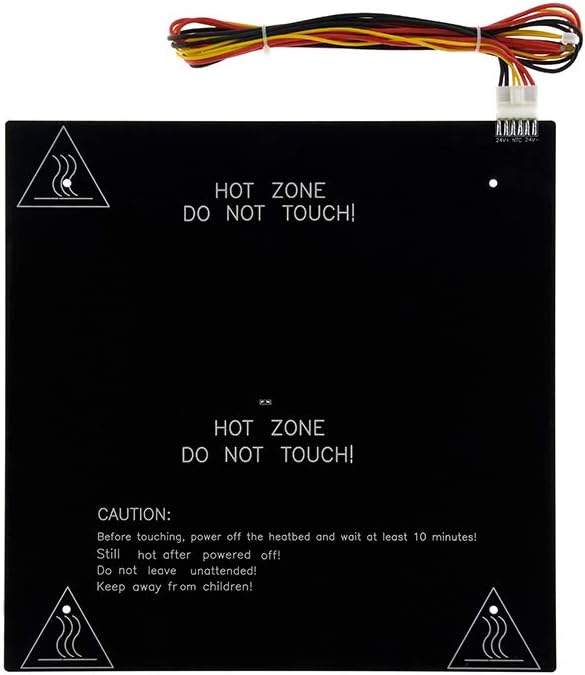


This official replacement offers a direct solution for users needing a new surface for their Ender 3 V2 or compatible models. With a strong rating and consistent heat distribution it ensures your prints stick properly without unexpected failures during long jobs.
We may earn a commission when you buy through this link, at no additional cost to you.
The key strength lies in its exact dimensional match to the original hardware guaranteeing no alignment issues with your printer frame. It arrives with the cable already installed simplifying the swap process significantly compared to generic third party alternatives that require extra wiring work.
Honest trade-offs include limited compatibility outside the Creality ecosystem which might restrict users with modified printers. However for standard setups these limitations are acceptable given the reliability and ease of installation provided by this specific part.
Anyone owning a Creality Ender 3 V2 or Neo model should consider this first for seamless integration. It provides a cost effective way to restore original performance levels ensuring your machine continues to produce high quality parts.
Designed specifically for Creality frames this bed ensures all mounting points align perfectly without modification or extra hardware.
The included assembled cable means you do not need to solder or splice wires making the upgrade process straightforward and safe.
We may earn a commission when you buy through this link, at no additional cost to you.
HICTOP provides a solid third party option for those seeking a budget friendly replacement for common Ender 3 variants. It mirrors the standard specifications closely enough to function well in most stock configurations while offering broader compatibility with other brands.
We may earn a commission when you buy through this link, at no additional cost to you.
Its construction focuses on essential aluminum quality to deliver even heating across the build surface. The inclusion of a pre-installed cable reduces setup time making it a convenient choice for users who want to get printing quickly.
While it lacks the official branding some prefer the performance remains consistent for daily printing tasks. The main limitation is the reliance on standard components which may not offer the same longevity as premium custom engineered parts.
This bed is suitable for hobbyists looking to replace a worn surface without significant upgrades. It ensures your printer maintains necessary bed temperatures for successful adhesion on materials like ABS or PLA effectively.
Compatible with a range of Ender versions and the Aquila X2 this bed serves as a versatile replacement for many popular setups.
Delivering 220 watts of power it matches the expected heating output for standard 3D printing jobs without issues.
We may earn a commission when you buy through this link, at no additional cost to you.
This silicone heating pad stands out with a perfect rating indicating exceptional user satisfaction regarding its heating consistency and durability. It is designed to fit the standard 235 millimeter bed area providing efficient heat transfer without hot spots.
We may earn a commission when you buy through this link, at no additional cost to you.
The silicone construction allows for rapid heating which reduces wait times between prints significantly. Users benefit from the material's resistance to high temperatures ensuring the pad remains stable even during extended high heat printing sessions.
Installation might require a bit more care than a rigid aluminum plate as it needs proper adhesion to the glass or aluminum plate above. However the improved heat distribution often justifies the extra effort for quality conscious makers.
Makers looking for an upgrade to their standard aluminum plate will find this option highly rewarding. It provides the necessary thermal stability to prevent warping on larger prints while maintaining a reliable heating element for daily use.
Silicone technology ensures that heat spreads evenly across the entire surface eliminating cold spots that cause print failures.
The material withstands continuous high heat exposure which extends the lifespan of the heating element compared to basic pads.
We may earn a commission when you buy through this link, at no additional cost to you.
Designed specifically for the CR10 frame this bed offers a generous build area for those printing larger objects. The three millimeter thickness provides a sturdy foundation that resists bending and ensures consistent contact with your nozzle during printing.
We may earn a commission when you buy through this link, at no additional cost to you.
It comes with a power wire kit to simplify the electrical connection process for users upgrading their setup. The aluminum construction ensures even heat distribution across the larger surface area which is critical for preventing warping on big models.
The lower rating suggests some users may face issues with surface flatness or connection points upon receipt. It is important to inspect the unit carefully before installation to ensure it meets your quality standards for a precise printing environment.
If you are working with a CR10 printer and need a replacement this specific geometry is essential. It restores the necessary heating capabilities for your machine allowing you to continue producing large prints without interruption.
The three millimeter thickness adds structural integrity to the plate which helps maintain flatness even after repeated heating cycles.
Includes the necessary power wire to ensure you have everything needed to connect the bed to your control board safely.
We may earn a commission when you buy through this link, at no additional cost to you.
This massive heated bed supports a 500 millimeter build area which is ideal for industrial scale or large format printing projects. The high power output aims to compensate for the large surface area to ensure the bed reaches target temperatures efficiently.
We may earn a commission when you buy through this link, at no additional cost to you.
The integrated heating design attempts to optimize thermal conductivity between the heater and the aluminum substrate. Countersunk mounting holes help maintain a flat surface by eliminating protruding screws that could interfere with nozzle movement.
Users have reported significant issues with heating performance or reliability suggesting this product may not be consistent. It is advisable to check community feedback thoroughly before investing in such a large component for your specific printer.
For those needing an enormous surface area this model attempts to fill a niche that standard beds cannot. However due to mixed reviews it is crucial to verify compatibility and performance with your specific printer setup carefully.
The 500 by 500 millimeter surface allows for printing very large objects in one piece without needing to split them.
Integrated structure aims to reduce heat loss and maintain consistent temperatures across the wide surface area.
We may earn a commission when you buy through this link, at no additional cost to you.
This specialized heating mat is engineered for Voron projects requiring high performance heating and robust safety features. Its 750 watt capacity ensures rapid warm up times which is essential for maintaining print quality and reducing idle time between jobs.
We may earn a commission when you buy through this link, at no additional cost to you.
A key feature is the included bimetal thermal fuse which disconnects power if temperatures exceed safe limits protecting your build plate and electronics. The integration of a thermistor sensor ensures precise temperature monitoring throughout the entire printing process.
Installation requires careful handling of AC voltage and state relays which adds complexity for users without electrical experience. However for builders dedicated to Voron printers these safety and performance benefits are critical for long term reliability and safety.
Anyone building a high end Voron 2.4 or Trident system should consider this upgrade to ensure consistent thermal results. It supports high quality prints by eliminating cold zones and protecting your hardware from overheating risks effectively.
The bimetal thermal fuse automatically cuts power during overheat events providing a critical layer of protection for your printer setup.
Designed specifically for Voron projects this mat ensures the correct dimensions and heat distribution required for these complex printers.
We may earn a commission when you buy through this link, at no additional cost to you.
This bed is designed for Anet printers running on 12 volt systems providing a reliable replacement for older models. The aluminum substrate ensures durable heating performance and includes the necessary wire cable for a straightforward installation process.
We may earn a commission when you buy through this link, at no additional cost to you.
Users benefit from the exact dimensions matching standard Anet build plates which simplifies the upgrade to newer boards or components. The 120 watt rating provides sufficient heat for typical PLA and ABS printing needs on this size frame.
The limitation is strictly voltage compatibility meaning it will not work with 24 volt systems without modification. For Anet users this is a convenient fix to restore heat function without needing complex adapter solutions or rewiring.
Owners of Anet A8 or A6 printers looking for a direct replacement will find this highly suitable. It restores standard heating capabilities ensuring your machine can maintain stable temperatures for successful adhesion and print quality.
Optimized for 12 volt control boards this bed ensures correct power usage without risking damage to your printer electronics.
Designed to match standard Anet dimensions and connectors making it a direct fit for compatible models without extra work.
We may earn a commission when you buy through this link, at no additional cost to you.
Offering a 400 millimeter build area this bed fills a gap between standard small and large formats for versatile printing. The countersunk hole design maintains flatness by avoiding protrusions that could cause nozzle collisions during high speed prints.
We may earn a commission when you buy through this link, at no additional cost to you.
Integrated heating and aluminum substrate help maintain consistent power output reducing the risk of warping or curling during operations. It is marketed as compatible with popular frames like the Ender 3 Pro and CR10 making it a flexible choice.
Lacking user ratings makes it harder to verify long term reliability or real world performance. Potential buyers should consider this a niche option for those needing specific dimensions and willing to test the product carefully.
For users requiring a larger surface than standard beds this offers a structured upgrade path. It provides the necessary heating stability and flatness needed for precise printing on medium to large scale projects.
Countersunk holes ensure the surface remains perfectly flat improving print quality and reducing nozzle collision risks effectively.
Integrated design maintains consistent heating performance to minimize defects like warping or curling during long prints.
We may earn a commission when you buy through this link, at no additional cost to you.
This large format bed features a substantial 500 millimeter build area and high power output for rapid heating to 100 degrees quickly. The aluminium alloy structure ensures a robust and stable platform for demanding industrial or handcraft printing applications.
We may earn a commission when you buy through this link, at no additional cost to you.
Integrated heating design aims to improve thermal stability and consistency across the large surface. The countersunk hole layout prevents nozzle collisions and maximizes usable print area without sacrificing structural integrity or flatness.
High wattage demands careful planning of power supply and wiring to ensure safe operation. Absence of user feedback means performance claims are based on specs which requires buyer verification before installation.
Ideal for large scale industrial printers needing fast heating on big beds this model delivers high capacity. It provides the stability and speed necessary for efficient production of large parts.
High power allows the bed to reach target temperatures quickly significantly reducing preheating times for faster production.
Aluminium alloy construction provides the durability required for continuous high temperature operations in professional settings.
We may earn a commission when you buy through this link, at no additional cost to you.
A specialized heater pad for Voron 2.4 and Trident printers delivering fast and even heating for accurate print results. The 220 volt AC power ensures rapid warm up which is essential for maintaining stable thermal conditions on large builds.
We may earn a commission when you buy through this link, at no additional cost to you.
Perforated design balances heat dissipation and installation convenience allowing secure placement within the printer frame. It reduces fluctuations and prevents warping ensuring smooth flat prints and reliable thermal stability for long sessions.
Installation requires careful attention to high voltage safety and proper relay integration to ensure safe operation. The specific dimensions make it a targeted solution for Voron users seeking performance upgrades over stock components.
For builders looking to upgrade Voron printers with high efficiency heat this pad is a compelling option. It delivers the fast uniform heating needed for consistent quality on demanding high volume prints.
High wattage AC power ensures the bed heats quickly and evenly reducing print times and improving overall thermal stability.
Designed to match Voron 2.4 and Trident specifications this pad ensures a seamless upgrade to your existing build setup.
We may earn a commission when you buy through this link, at no additional cost to you.
Selecting the right heated bed involves evaluating compatibility voltage power and build size to ensure your printer runs smoothly.
Always confirm that the dimensions and mounting holes match your printer frame to avoid alignment issues or gaps.
This ensures a seamless installation without needing to modify your existing printer structure or mounting points.
Check if your printer uses 12 volt or 24 volt power supplies to ensure the heater matches safely.
Using the wrong voltage can lead to failure damage or unsafe electrical operation for your machine.
Higher wattage heats the bed faster which is critical for large prints or materials requiring high temperatures.
Ensure your power supply can support the wattage to prevent tripping fuses or electrical instability.
Decide between rigid aluminum plates and flexible silicone pads based on your adhesion needs.
Silicone pads often heat faster while rigid plates offer better durability for frequent use.
Look for thermal fuses or sensors that protect against overheating during extended printing sessions.
Safety features are vital for preventing fire hazards when operating unattended or for long periods.
Ensure the kit includes compatible wires or connectors to minimize soldering or additional wiring work.
Complete kits save time and reduce the risk of electrical mistakes during installation and setup.
Reputable brands often provide better quality control and support for warranty issues if parts fail.
Consider reading user reviews to gauge real world performance before making your purchase.
Compare the price against performance features to find a balance between budget and quality.
Investing in a reliable bed can prevent costly print failures and save money on materials.
Start by ensuring all connections are secure before turning on your power supply to avoid shorts or sparks.
Always monitor the first few layers of your print to confirm the bed is heating evenly and adhesives are holding properly.
Regularly clean the surface to remove residue and avoid using sharp tools that could damage the heating element underneath.
You should match the size of your existing build plate to avoid printing space issues. Standard Ender 3 beds are 235 by 235 millimeters while others may be larger or smaller. Check your printer manual to confirm exact measurements.
Often the existing power supply works if the wattage and voltage match. If upgrading to a higher wattage bed you might need a more powerful supply to handle the load safely.
Slow heating can be due to low wattage poor wiring or insufficient insulation. Check that the bed is rated correctly and that there are no gaps under the bed causing heat loss.
Yes silicone pads can replace aluminum plates but need proper adhesion to ensure even heat transfer. They offer faster heating but may require more care during cleaning and installation.
Use a multimeter to check for resistance or continuity on the heating element. If the bed shows infinite resistance or does not heat up at all it is likely defective.
A thermal fuse is a safety device that cuts power if the temperature exceeds a safe limit. It protects your printer from overheating and potential fire hazards during printing.
24 volt systems are more efficient for higher power heaters reducing current draw and wire heating. Most modern printers use 24 volts for better performance and safety.
Replace the bed if you notice uneven heating physical damage or wiring failure. Regular maintenance can extend its life significantly so inspect it periodically.
We have reviewed ten top options ranging from official replacements to high power upgrades for various printer models.
Prioritize compatibility and safety features to ensure your printer operates reliably without electrical risks or failures.
Always check current availability and details before buying to ensure you get the right part for your setup today.