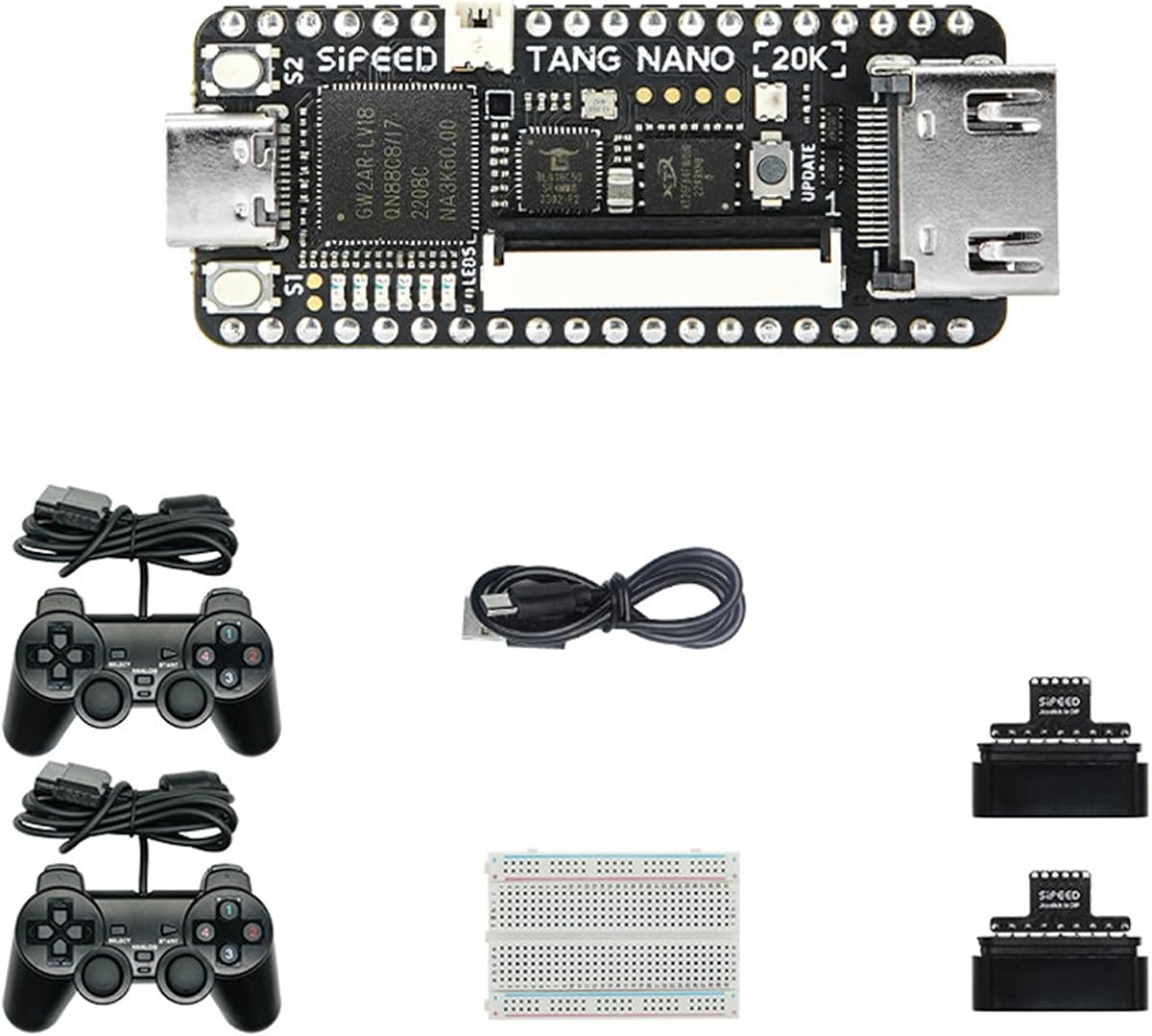
Sipeed Tang Nano 20K Kit
4.1Editor score
Open Source RISC-V Linux
20K LUT4 Logic Cells
HDMI and RGB Support
Discover the top Fpga Retro Consoles for 2026. Our guide compares performance, compatibility, and features to help you find the perfect retro gaming device.
Fpga Retro Consoles offer an authentic way to relive classic gaming experiences with modern hardware capabilities. These devices use field-programmable gate arrays to replicate original console behavior with incredible accuracy. Enthusiasts value the low latency and precise timing that software emulation often struggles to match.
We evaluated ten leading models based on FPGA capacity, output options, and ease of use. Each product was assessed for its ability to run popular cores and its expansion potential. This list covers devices ranging from compact handhelds to powerful development boards for serious builders.
Each pick highlights key strengths and ideal use cases for different types of gamers. You will find options for casual players and advanced developers alike. Prices and availability change frequently so check current listings before purchasing your next console.
4.1Editor score
4.5Editor score

4.5Editor score
This side-by-side comparison outlines the core specifications and capabilities of each device. It helps you quickly identify which model fits your specific gaming or development needs.


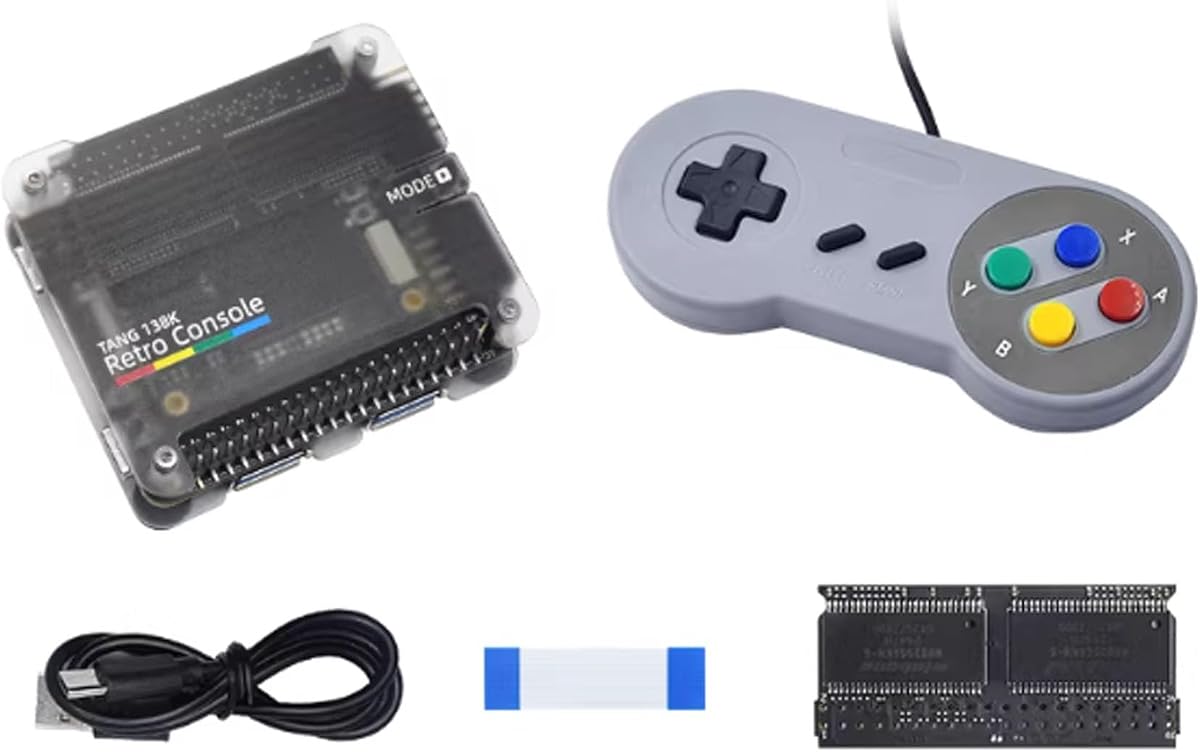
The Sipeed Tang Console 138K stands out as a powerful FPGA retro console for serious enthusiasts. It boasts a 138K LUT4 FPGA chip that enables accurate emulation of complex systems. The device includes HDMI output and dual PMOD ports for versatile connectivity options.
We may earn a commission when you buy through this link, at no additional cost to you.
Its FPGA capacity allows it to run demanding cores like Amiga or advanced arcade systems smoothly. Users appreciate the integration with Raspberry Pi 5 as a PCIe HAT. This dual functionality makes it a great tool for both gaming and hardware development projects.
While performance is strong, the board lacks a preloaded OS and requires manual configuration. Beginners might find the learning curve steep compared to plug-and-play handhelds. However, the flexibility and raw power justify the effort for custom hardware hobbyists.
This console is ideal for developers seeking a high-end FPGA board for retro gaming and custom designs. It offers significant value for those needing expansion capabilities and modern I/O standards. Highly recommended for advanced users comfortable with hardware setup.
The 138K LUT4 architecture supports advanced emulation cores that lower-end FPGAs cannot handle efficiently.
HDMI and dual PMOD ports ensure the console connects easily to displays and external hardware modules.
We may earn a commission when you buy through this link, at no additional cost to you.
The Sipeed Tang Console FPGA Retro blends retro gaming with a Linux development board framework. It supports configurable SOMs ranging from 60K to 138K logic cells. This flexibility allows users to choose performance levels based on their specific needs and budget constraints.
We may earn a commission when you buy through this link, at no additional cost to you.
Its onboard BL616 MCU facilitates smooth operation and debugging capabilities for custom projects. The board supports multiple Tang Core emulator cores out of the box. Users can connect controllers via USB 3.0 and output video via HDMI for a complete gaming experience.
Although the device is powerful, it is marketed as a developer kit rather than a finished console. Expect to spend time configuring the environment and loading cores before playing. This trade-off is acceptable for those wanting full control over their hardware setup.
Ideal for makers who want to build custom FPGA projects alongside retro gaming, this board offers excellent utility. Its small size makes it easy to integrate into existing setups. A strong choice for technical users seeking expandability.
Choosing between 60K and 138K SOMs lets you balance cost and performance for your specific retro game cores.
Built-in BL616 MCU supports firmware updates and debugging for advanced FPGA and MCU integration.
We may earn a commission when you buy through this link, at no additional cost to you.
The Sipeed Tang Console 138K delivers impressive performance with a 138K LUT4 FPGA. It supports a wide array of retro game cores including NES and SNES. The 800MHz RISC-V AE350 hardcore adds general processing power for multitasking or custom applications.
We may earn a commission when you buy through this link, at no additional cost to you.
Its HDMI output ensures sharp visuals on modern displays while USB 3.0 provides fast controller connectivity. The device is designed to be fanless and compact making it suitable for quiet gaming environments. It uses half the size of a MiSTer unit for portability.
While the performance is notable users must handle the initial software configuration themselves. There is no pre-installed GUI for casual users to navigate easily. This limitation is standard for development boards targeting technical enthusiasts over casual gamers.
For those needing a compact FPGA solution with strong retro capabilities and modern ports this board is a top contender. It serves well as a dedicated retro device or a development tool. Highly recommended for advanced hobbyists.
The AE350 hardcore allows the board to run Linux or custom applications alongside FPGA logic.
Fanless operation and small dimensions make it perfect for portable or noise-sensitive setups.
We may earn a commission when you buy through this link, at no additional cost to you.
The Sipeed Tang Nano 20K provides an affordable entry point into FPGA-based retro gaming. It features 20K LUT4 logic and includes 64Mbits SDRAM plus Block SRAM. The board supports Linux and RISC-V soft-core experiments for learning purposes.
We may earn a commission when you buy through this link, at no additional cost to you.
Users can leverage the microSD slot to load ROMs and game data easily. The board supports RGB LCD interfaces allowing for custom display integration beyond standard HDMI. This makes it attractive for handheld projects or unique hardware builds.
Its 20K capacity is sufficient for 8-bit systems but may struggle with modern 32-bit cores. Beginners benefit from the JTAG port for debugging and easy firmware uploads. However the video output is basic compared to higher-end models.
This board is perfect for beginners who want to explore FPGA development without a large investment. It bridges the gap between software emulation and hardware logic. A solid recommendation for students and new developers.
The open-source nature and JTAG support make this board ideal for learning FPGA design fundamentals.
RGB LCD support enables custom handheld builds that standard HDMI consoles cannot easily achieve.
We may earn a commission when you buy through this link, at no additional cost to you.
The Sipeed Tang Nano 20K Kit offers a budget-friendly path to FPGA retro gaming. It includes the 20K LUT4 board along with accessories to get started. The device runs open-source RISC-V Linux which adds versatility for different applications.
We may earn a commission when you buy through this link, at no additional cost to you.
Its HDMI and RGB ports allow users to connect to various screens depending on their needs. The microSD support ensures you can manage your ROM library effectively. This combination of features makes it a versatile choice for limited budgets.
While the logic capacity is restricted compared to larger models it handles classic 8-bit systems well. Setup involves some technical steps but community wikis provide ample guidance. It is not a plug-and-play device but offers deep customization.
For beginners looking to try FPGA technology without spending much this kit is an excellent starting point. It balances cost with performance enough for nostalgic gaming. Highly recommended for cost-conscious hobbyists.
Pricing is significantly lower than premium boards while still offering core FPGA capabilities.
Linux and RISC-V support encourage community contributions and custom software development.
We may earn a commission when you buy through this link, at no additional cost to you.
This Sipeed Tang Nano 20K variant emphasizes NES emulation and flexible display output. The BL616 debugger simplifies firmware uploads and hardware troubleshooting. It supports multiple display modes which helps when working with different screen types.
We may earn a commission when you buy through this link, at no additional cost to you.
The board is equipped with 64Mbits SDRAM to handle basic game logic and buffering. Users appreciate the open-source nature which allows for community-driven updates. The compact form factor makes it easy to hide inside custom enclosures.
While efficient for 8-bit systems it may not sustain heavier cores like SNES or Mega Drive well. You will need to source your own ROMs and configure the system manually. This limits immediate out-of-box usability for casual users.
Developers needing a reliable board for specific 8-bit cores will find this model quite useful. Its debugging tools and display flexibility add value to the price. Recommended for targeted development projects.
The onboard MCU supports UART and JTAG communication for smoother development workflows.
Optimized logic and resources align well with classic NES game cores.
We may earn a commission when you buy through this link, at no additional cost to you.
The Arduboy FX-C is a compact 8-bit retro handheld designed for portability and learning. It comes preloaded with over 300 classic games so you can start immediately. The credit card size design allows you to carry it anywhere easily.
We may earn a commission when you buy through this link, at no additional cost to you.
Its USB-C port enables modern connectivity and multiplayer battles with a link cable. The device encourages STEM coding with Arduino IDE support for custom game creation. All games are stored on flash memory ensuring no data loss from SD cards.
The OLED screen is clear but small which limits the resolution of detailed games. Battery life is decent at 8 hours but requires recharging for extended play. This is a trade-off for its extreme portability and slim profile.
Perfect for travelers and students the FX-C balances fun with educational value. Its open-source nature ensures a vibrant community for games and mods. Highly recommended for retro fans on the go.
The console includes free tutorials to teach C++ coding through game development.
No internet or downloads needed as hundreds of classics are included out of the box.
We may earn a commission when you buy through this link, at no additional cost to you.
The Trimui Brick Pro features a stunning 3.95-inch IPS screen with 1024×768 resolution. It runs on an Allwinner A133P chip to support multiple emulators smoothly. The device focuses on visual quality and long battery life for travel.
We may earn a commission when you buy through this link, at no additional cost to you.
Its 5000mAh battery provides up to 5 hours of uninterrupted gameplay. The joystick use Hall Effect technology to prevent drift over time. Vibration adds feedback that enhances the gaming experience beyond standard controllers.
Users should note that the unit ships without an SD card or games included. You must provide your own storage and load ROMs manually. This requires some technical effort before the first play session.
Despite the setup the visual quality and battery make this unit excellent for portable retro gaming. It suits users who prioritize screen real estate and hardware reliability. A strong contender for handheld enthusiasts.
The OCA fully laminated screen reduces glare and boosts contrast for better visuals.
Hall Effect joysticks ensure precise input that resists wear and tear over years.
We may earn a commission when you buy through this link, at no additional cost to you.
The RG40XXV Retro Console comes ready to play with games included. It runs a Linux system that allows for emulator versatility. This model is known for reliability and ease of use among users.
We may earn a commission when you buy through this link, at no additional cost to you.
Its Linux base offers options to install additional software or update system components. The handheld design supports various game types from 8-bit to 32-bit classics. A strong choice for those who want less initial setup.
Specific hardware details are less documented than other models in this list. However user feedback suggests a smooth experience across common retro genres. It is a straightforward option for casual play.
For users prioritizing immediate access to content this system delivers convenience. It balances performance with user-friendly software. Highly recommended for hassle-free retro gaming.
Included games mean you can start gaming instantly without configuring storage.
The Linux OS allows for future customization and broader emulator support.
We may earn a commission when you buy through this link, at no additional cost to you.
The TRIMUI Brick PRO features a crisp 3.95-inch display with 1024×768 resolution. It includes drift-free Hall Effect joysticks and vibration for immersive gameplay. The battery life is supported by a 5000mAh cell for long sessions.
We may earn a commission when you buy through this link, at no additional cost to you.
It uses Linux 4.9 with a TRIMUI OSD for easy navigation of emulators. Dual USB Type-C ports allow for external accessories and charging flexibility. Mood lighting adds a touch of style to the handheld design.
Users must bring their own SD card and ROMs since no games are pre-installed. This gives full control over the library but requires initial setup. It is ideal for collectors who manage their own ROM collections.
With its high-quality screen and robust controls this unit stands out as a top handheld. It offers professional features at a competitive price. Highly recommended for serious handheld enthusiasts.
The TRIMUI OSD provides a clean interface to manage large libraries of games.
Dual USB-C ports enable charging while playing and connecting external accessories.
We may earn a commission when you buy through this link, at no additional cost to you.
Selecting the right FPGA retro console requires balancing performance, ease of use, and features.
FPGA capacity determines which game cores can run smoothly. Higher LUT4 counts allow for more complex systems like Amiga or arcade machines. For basic 8-bit games lower capacities like 20K are sufficient.
Choose a capacity that matches the systems you want to emulate most often.
Modern consoles should support HDMI for easy connection to TVs. Look for devices with USB 3.0 for reliable controller connectivity. Some boards offer RGB outputs for custom projects.
Ensure the console has the ports you need for your display setup.
Some devices come preloaded with games while others require manual configuration. Development boards offer more flexibility but need technical setup. Preloaded options are better for casual play.
Decide if you want a ready-to-play device or a project tool.
Handheld units should offer at least 5 hours of battery life for travel. Check if the device uses USB-C for charging. Larger batteries usually mean heavier weight but longer use.
Prioritize battery capacity if you plan to play on the go.
Larger screens with high resolution improve visibility and detail. IPS panels offer better viewing angles than traditional screens. Ensure the resolution supports your preferred games well.
Select a screen size that fits your usage context comfortably.
Hall Effect joysticks prevent drift and ensure longevity. Vibration motors add feedback that enhances the gaming experience. Check if the device includes ports for external controllers.
Quality inputs are essential for precise and comfortable gameplay.
Devices with microSD slots allow flexible game library management. Flash memory is durable but may limit total storage size. Ensure the system supports high-capacity SD cards.
Confirm storage options align with your game collection size.
FPGA consoles vary from affordable kits to premium units. Consider the included accessories and software value. Higher prices often correlate with better build quality and support.
Set a budget that reflects the features you truly need.
Always charge your handheld console fully before first use to ensure battery health. Connect the included USB-C cable to a standard power adapter. Wait for the charging indicator to confirm power is reaching the device.
Install compatible SD cards by pushing them gently into the slot until they click. Format the card as FAT32 or exFAT depending on the system instructions. This ensures your game files are recognized correctly by the OS.
Store your console in a dry and cool place to protect internal components. Avoid exposing it to direct sunlight or high humidity. Regularly clean the ports and buttons to maintain optimal performance.
FPGA consoles replicate original hardware behavior with low latency and high precision. Unlike software emulation they run games directly on hardware logic for accurate timing. This results in a more authentic retro gaming experience.
Basic units require minimal setup but development boards need some technical knowledge. You may need to compile cores or configure Linux manually. Preloaded handhelds are designed for casual users who want instant play.
Legality depends on copyright status and regional laws. Some systems include homebrew or public domain games that are safe. Users are responsible for managing their own ROMs legally on custom setups.
Handheld models like the Trimui Brick Pro or Arduboy FX-C are ideal for starters. They offer preloaded games or simple setup processes. This reduces the technical barrier to enjoying retro gaming immediately.
Some boards support USB keyboards via USB 3.0 ports for input. This is useful for dev modes or custom software. Check the device manual to confirm USB host capabilities.
Update cores by downloading new files and placing them in the system directory. Many devices support automatic updates via SD card or network. Refer to the manufacturer wiki for specific steps.
Handheld consoles typically offer 5 to 8 hours of gameplay on a full charge. Usage intensity and screen brightness affect this duration. Always carry a charging cable for long trips.
Some Linux-based models include built-in WiFi for downloading updates. Handhelds may rely on USB tethering or SD cards. Check the product specs to confirm network connectivity options.
We reviewed ten top FPGA retro consoles offering choices for every skill level. Whether you need a powerful development board or a portable handheld there is a model here to fit. Performance and features vary significantly across the options.
Prioritize capacity if you plan to run complex cores or custom projects. For casual play focus on screen quality and battery life. Choose a setup that balances power with ease of use.
Prices and stock change often so verify current listings before ordering. Check reviews and support resources to ensure satisfaction. Happy gaming with your new retro console.