
Upgraded Watt Power Meter Plug
4.6Editor score
7 display modes for parameters
Adjustable backlight time settings
Overload protection up to 3680W
This guide compares the top electricity meters for RVs to help you monitor usage, manage costs, and ensure safe power monitoring at campsites and home bases.
Choosing the right electricity meter for your RV is essential for managing power consumption and avoiding unexpected bills at campsites. These devices provide clear insights into how much energy your appliances use, helping you make informed decisions about your electrical setup.
We compared ten highly rated meters based on accuracy, installation ease, durability, and compatibility with common RV electrical systems. Our selection includes sub-meters, plug-in monitors, and surge protectors with energy tracking to suit different needs and budgets.
Each pick highlights key features like LCD displays, communication ports, and safety ratings. While prices may fluctuate, these models offer reliable performance for tracking kWh usage in RV parks, workshops, and residential settings.
4.6Editor score

4.8Editor score

3.5Editor score
Below is a side-by-side comparison of all ten selected meters, highlighting their key specifications and ideal use cases for RV owners and property managers.
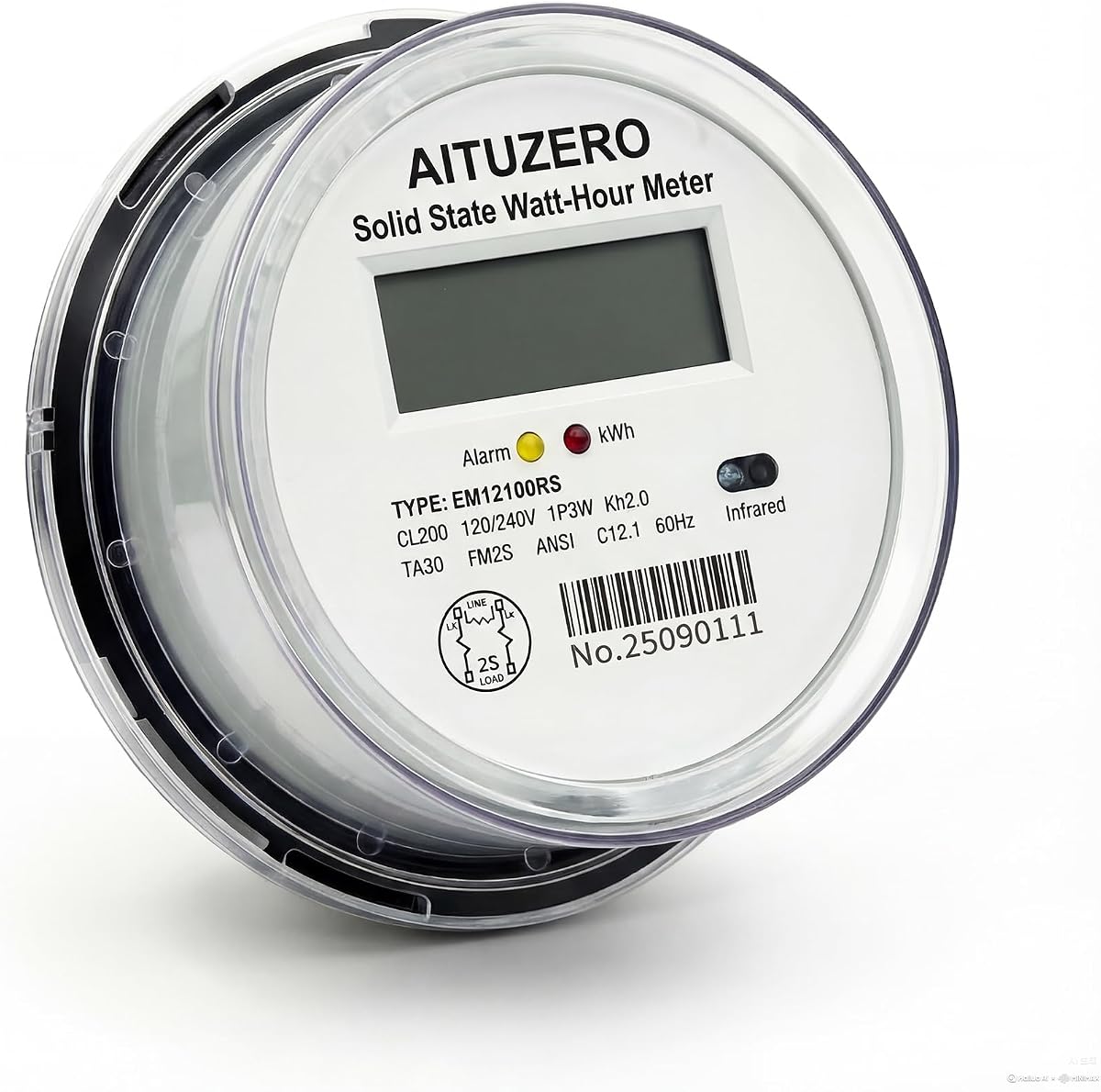


This digital energy meter stands out as the top choice for RV owners and property managers needing precise power tracking. With a 4.5 rating, it delivers reliable performance through its ANSI Form 2S compatibility and solid-state electronics.
We may earn a commission when you buy through this link, at no additional cost to you.
Its standout quality is the ability to monitor solar import and export, making it ideal for hybrid systems. The bright LCD cycles through voltage and current data, while pulse outputs allow integration with external monitoring systems.
While installation requires some electrical expertise, the labeled terminals simplify the process. The main trade-off is the need for a proper enclosure to protect the circuitry from harsh outdoor conditions.
Buyers seeking a durable solution for RV parks or rental units will find this meter delivers consistent data. It balances accuracy with ease of use for both DIY enthusiasts and professionals.
The reverse-flow LED helps users quickly detect backfeed issues from inverters.
EEPROM memory retains usage data during power outages for uninterrupted monitoring.
We may earn a commission when you buy through this link, at no additional cost to you.
This energy monitor earns a 4.7 rating for its robust design and focus on fair cost allocation. It fits standard 4-jaw sockets and supports systems up to 200A, making it versatile for larger RV setups.
We may earn a commission when you buy through this link, at no additional cost to you.
Its key strength is the reliable data retention during power outages. The backlit LCD ensures visibility in dim utility rooms, while the LED indicator confirms normal operation without needing to check the display.
The lack of communication ports limits advanced integration compared to other models. However, for straightforward monitoring where accuracy and durability matter most, this remains a strong contender.
Property owners managing multiple RV spaces will appreciate the straightforward billing support. It offers a balance of performance and simplicity for standard electrical configurations.
Handles loads up to 200A, suitable for heavy appliances and workshops.
Built to withstand harsh weather and jobsite conditions effectively.
We may earn a commission when you buy through this link, at no additional cost to you.
A top budget pick, this plug-in meter scores 4.6 for its versatility and cost-effectiveness. It monitors power, energy, and cost for individual appliances, ideal for tracking specific loads inside the RV.
We may earn a commission when you buy through this link, at no additional cost to you.
The 7 display modes and adjustable backlight make data easy to read day or night. Overload protection warns users when power exceeds safe thresholds, preventing potential electrical issues.
It lacks the capacity for main RV power monitoring at pedestals. This limits its use to internal appliances rather than whole-system tracking, but it remains valuable for spot checks.
RV travelers wanting to identify high-drain devices without rewiring will find this useful. It provides essential insights at a fraction of the cost of hardwired solutions.
Calculates electricity bills based on cumulative usage and unit price settings.
Records power consumption even when removed from the socket.
We may earn a commission when you buy through this link, at no additional cost to you.
With a 4.8 rating, this meter excels in precision and build quality. Its 0.5-level accuracy ensures dependable data for daily tracking in RVs and homes alike.
We may earn a commission when you buy through this link, at no additional cost to you.
The triple resistance to dust, water, and pressure enhances longevity in complex environments. High-definition display delivers sharp readouts, aiding quick checks during routine monitoring.
While it adheres to strict ANSI standards, the C1S design may require specific socket types. This compatibility check is necessary before purchase but ensures safety and reliability.
Users prioritizing accuracy and durability in harsh conditions should consider this model. It combines professional-grade specs with practical design for reliable long-term use.
Meets ANSI C12.1 standards for electrical safety and measurement accuracy.
Handles high humidity and dust without compromising performance.
We may earn a commission when you buy through this link, at no additional cost to you.
This premium unit combines surge protection with energy monitoring for a 3.5 rating. It offers 16,000 Joules of defense, shielding expensive RV electronics from grid spikes.
We may earn a commission when you buy through this link, at no additional cost to you.
Real-time monitoring of six parameters helps prevent breaker trips by balancing loads. The internal temperature sensor adds a safety layer by alerting users to abnormal heat.
While robust, the price is higher than simple meters. The rating reflects its specialized nature, balancing surge protection with tracking capabilities rather than pure metering focus.
Ideal for Class A motorhomes needing comprehensive safety and usage data. It provides peace of mind during long stays at metered campsites.
Sacrifices itself to save RV electronics from lightning and grid spikes.
Continuously checks internal operating temperature to prevent overheating.
We may earn a commission when you buy through this link, at no additional cost to you.
This plug-in meter achieves a 4.6 rating for its user-friendly interface and cost tracking. The 8 display modes cover all essential metrics, including total cost and power factor.
We may earn a commission when you buy through this link, at no additional cost to you.
Premium ABS material ensures durability, while the white backlight enhances readability. The reset function allows quick data clearing without needing tools, simplifying reuse.
The default overload threshold is set relatively low for safety, which may require adjustment for heavier loads. It remains best suited for standard household appliances within the RV.
Those focused on identifying energy-wasting appliances will find this practical. It provides detailed insights to optimize internal power consumption efficiently.
Displays total electricity bill cost based on unit price settings.
High-quality ABS construction ensures fireproof and drop-resistant performance.
We may earn a commission when you buy through this link, at no additional cost to you.
With a 4.8 rating, this sub meter stands out for its advanced connectivity. The RS485 Modbus interface allows multiple meters to connect for centralized monitoring networks.
We may earn a commission when you buy through this link, at no additional cost to you.
It measures import and export energy, making it perfect for solar or hybrid systems. The pulse output simplifies integration with external counters or PLC systems.
Configuration requires authorized tools via the IR port, which adds complexity. However, this ensures secure setup for professional energy management applications.
Property managers or tech-savvy RV owners needing data integration should choose this. It offers scalability and precise tracking beyond standard meters.
Supports Modbus RTU for connection with monitoring gateways.
IR interface restricts configuration to authorized personnel only.
We may earn a commission when you buy through this link, at no additional cost to you.
This meter holds a rare 5.0 rating for its reliability in 240V 2-wire systems. It offers clear tracking for RVs and campers using standard pedestal configurations.
We may earn a commission when you buy through this link, at no additional cost to you.
The Type C1S design ensures compatibility with 4-jaw sockets for easy installation. Users appreciate the straightforward LCD that avoids complicated reading steps.
It lacks advanced communication features found in higher-end models, but its focus on basic accuracy suits many residential needs. The sturdy housing supports daily use.
For those needing a simple, effective meter for 2-wire setups, this is ideal. It delivers consistent data without unnecessary complexity.
Focuses on clear kWh tracking for daily power management.
Specifically designed for 240V 2-wire electrical systems.
We may earn a commission when you buy through this link, at no additional cost to you.
Earning a 4.8 rating, this meter delivers precision for 3-wire systems. Its high-definition display and triple protection make it reliable for diverse environments.
We may earn a commission when you buy through this link, at no additional cost to you.
The design meets ANSI C12.1 specifications, ensuring safety and accuracy. Installation is practical, using a C1S structure that fits standard 4-jaw sockets well.
While it lacks advanced data logging, its robust build supports stable operation. Users prioritizing safety and clear readings will find this a solid choice.
RVs and homes on 3-wire systems benefit from its durability. It balances professional specs with practical usability.
Triple dustproof, waterproof, and pressure-resistant protection.
High-precision LCD provides sharp, easy-to-read power data.
We may earn a commission when you buy through this link, at no additional cost to you.
With a 4.4 rating, this hardwired meter offers flexibility with split-core CTs. It monitors generator loads and RV power without cutting monitored wires.
We may earn a commission when you buy through this link, at no additional cost to you.
The wide voltage range supports many electrical panels. Power-off memory ensures data retention, while the visual alarm warns of threshold exceedances clearly.
It requires installation precautions but offers robust monitoring for light commercial or workshop projects. One meter can monitor one leg for split-phase systems.
Ideal for setups needing quick retrofits without rewiring. It provides clear readings for load balancing and energy use.
Clamps around live conductors to simplify installation.
Flashes display when preset power thresholds are exceeded.
We may earn a commission when you buy through this link, at no additional cost to you.
Selecting the right meter involves considering voltage compatibility, installation type, and features needed for your specific RV or property setup.
Ensure the meter matches your RV's electrical system, typically 120V, 240V, or split-phase. Models vary by wire count, such as 2-wire or 3-wire configurations, so verify the specifications before purchase.
Choose a meter that aligns with your panel or pedestal requirements to avoid compatibility issues.
Hardwired meters provide permanent, accurate monitoring but require electrical expertise. Plug-in meters are simpler to install but are limited to individual appliances rather than whole-system tracking.
Decide based on whether you need permanent monitoring or temporary spot checks.
Look for meters meeting industry standards like ANSI Form 2S or C12.1 for reliable readings. Higher accuracy levels, such as 0.5, ensure precise data for billing or energy management.
Prioritize models with verified accuracy to avoid errors in usage tracking.
Advanced users may need communication ports like RS485 or Modbus for data logging. These features allow centralized monitoring across multiple meters or systems.
If you need automated reporting, select a meter with appropriate connectivity options.
RVs often face harsh conditions, so consider dust, water, and pressure resistance ratings. Proper housing ensures the meter survives outdoor environments without damage.
Choose a model rated for your expected environmental exposure.
A clear, backlit LCD helps read data in various lighting conditions. Features like auto-cycling through parameters save time during checks.
Opt for displays that prioritize user-friendly visibility.
Meters with EEPROM or non-volatile memory retain data during power outages. This ensures you do not lose cumulative usage records unexpectedly.
Check for memory features if uninterrupted tracking is critical.
Balance your budget with the features you need. Simple meters are affordable but may lack communication or advanced tracking, while premium options offer more capabilities.
Invest in features that match your monitoring goals.
Install the meter according to manufacturer guidelines, ensuring power is off before hardwired connections. Plug-in models simply connect to standard outlets for monitoring.
Regularly check the display for readings and ensure the LCD remains clean and readable. Update settings like time or unit prices periodically to maintain accurate cost tracking.
Protect hardwired meters in appropriate enclosures to shield against moisture and debris. Periodically inspect connections for wear to ensure long-term performance.
Most RVs operate on 120V or 240V systems, so choose a meter that matches your specific setup. Verify if you need single-phase or split-phase support to ensure compatibility with your electrical panel.
Plug-in meters are DIY-friendly, but hardwired models typically require professional electrical knowledge. If unsure, hire a licensed electrician to ensure safety and compliance with local codes.
Some models support import and export monitoring, which is ideal for solar setups. Look for meters with reverse-flow indicators or specific solar tracking features for accurate renewable energy insights.
Most quality meters offer high accuracy, often meeting ANSI standards for reliable readings. Advanced models with precision levels like 0.5 provide dependable data for billing and management.
Many meters are built with rugged housings for outdoor use, but always check the enclosure rating. Proper installation in a protective box enhances durability against weather conditions.
Meters with communication ports like Modbus allow integration with data loggers for remote tracking. Basic models may require manual reading unless paired with external monitoring devices.
Most modern meters store data in non-volatile memory, so usage records remain intact. This ensures you do not lose cumulative energy information during outages.
Plug-in models usually have a reset button or mode to clear cumulative values. Hardwired meters may require specific steps via the display or external tools depending on the model.
These ten meters cover a wide range of needs from budget-friendly plug-ins to advanced hardwired solutions. Top picks like the Digital Electric Meter for RV & Home offer excellent precision and durability.
Prioritize compatibility with your electrical system and the level of data access you require. Whether tracking solar or managing campground costs, the right meter provides valuable insights.
Remember to check current prices and availability as models and deals change. Investing in a quality meter helps optimize energy use and ensures safe power management.