
RISEPRO Digital Sound Level Meter HT-80A
4.4Editor score
Affordable price point
Backlit display for dark use
Auto power off function
This guide compares the top decibel meter options for accurate sound level monitoring across home, office, and industrial environments with detailed feature
Finding the right decibel meter is essential for monitoring noise levels in various environments. Whether you need to check workplace safety, study ambient sound, or manage home theater audio, a reliable meter ensures accurate measurements. This guide highlights the best options available today.
We evaluated ten top-rated decibel meters based on accuracy, features, ease of use, and value. Each model offers unique capabilities like A and C weighting, data logging, and backlight displays. Our comparisons help you choose the perfect tool for your specific noise monitoring needs.
Each product pick includes detailed specifications, pros, cons, and real-world application insights. We focus on performance metrics and user-friendly design to ensure you get reliable results. Remember that prices and availability can change, so check current listings before purchasing.
4.4Editor score

4.5Editor score

4.2Editor score
The following table provides a side-by-side comparison of all ten decibel meters featured in this guide. Review the key specifications and features to quickly identify which model aligns best with your monitoring requirements and budget constraints.


The TopTes TS-501B stands out as a reliable tool for monitoring sound levels across various settings. With a solid rating from users, it delivers consistent performance for home and industrial use. Its large display ensures readability even in low light conditions.
We may earn a commission when you buy through this link, at no additional cost to you.
This model features both A and C weighting to simulate human ear response to different sound intensities. The condenser microphone captures frequencies from 30Hz to 8000Hz with high precision. Additional features like MAX/MIN tracking and data hold make it versatile for detailed noise analysis.
While it is battery operated and includes three AAA batteries, users should note the battery replacement frequency. The carry case is helpful but might show wear over time with heavy use. These trade-offs are acceptable given the overall value and accuracy provided.
Anyone needing a portable solution for checking neighbor noise or factory safety levels should consider this meter. It balances price and performance effectively. We recommend it for users who prioritize clear display and essential features without unnecessary complexity.
The condenser microphone ensures accurate capture of sound waves across a wide frequency range for reliable readings.
The non-slip side design and large buttons make operation intuitive even while wearing gloves or in tight spaces.
We may earn a commission when you buy through this link, at no additional cost to you.
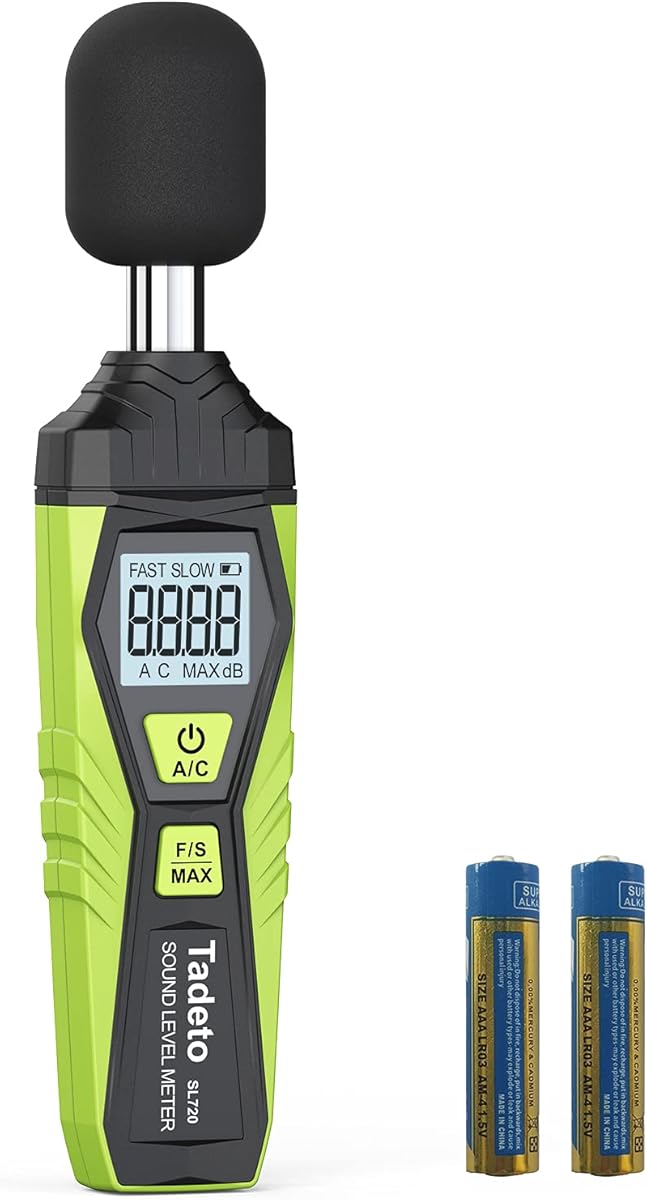
The Tadeto Digital Sound Level Meter offers a straightforward approach to noise measurement with essential features. It is designed for users who need quick readings without complex setup. The display resolution of 0.1 dB provides granular detail for precise monitoring tasks.
We may earn a commission when you buy through this link, at no additional cost to you.
Its ability to switch between fast and slow response rates makes it suitable for dynamic environments like traffic or construction sites. The A and C weighting options allow for versatile testing scenarios from ambient noise to machine analysis. The backlight ensures visibility in darker workshops.
While the accuracy is good at plus or minus 2 dB, it is slightly less precise than higher-end models. The casing is functional but may not withstand rough industrial drops as well as ruggedized alternatives. These points are minor considering the affordability and utility.
This meter is ideal for students or homeowners checking noise levels in bedrooms or offices. It provides enough functionality for general compliance checks without overpaying for advanced data logging. We suggest it for those needing a balance of cost and performance.
Adjustable time constants allow you to capture rapid noise spikes or average steady state ambient sound effectively.
The compact size fits easily in a pocket or bag, making it perfect for mobile sound inspections.
We may earn a commission when you buy through this link, at no additional cost to you.
DURFICST brings a modern touch to sound measurement with its LCD color screen interface. This visual upgrade enhances readability and adds a professional feel to the device. It maintains high accuracy suitable for both hobbyist and professional monitoring needs.
We may earn a commission when you buy through this link, at no additional cost to you.
The inclusion of SONE units alongside decibels offers a different perspective on perceived loudness. This is useful for acoustic fields where human perception matters more than raw intensity. The windbreak ball helps stabilize readings in breezy outdoor conditions.
The color display might drain batteries faster than monochrome screens, but the included carrying case helps protect the device. Users should keep spares handy for extended field work. The rubber wrapping provides a secure hold which is essential during active measurement.
Ideal for audio enthusiasts and field researchers, this meter combines style with substance. It handles environmental noise checks and acoustic calibration effectively. We recommend it for users who value visual clarity and unique unit options.
Switching to SONE helps you understand how loud a sound actually feels to the human ear.
The windbreak ball acts as a shield against air currents that could otherwise skew your noise readings.
We may earn a commission when you buy through this link, at no additional cost to you.
The Goldeep sound level meter is designed with safety and visibility in mind. Its bright orange casing ensures it is easy to spot in a cluttered workshop or outdoor site. Users report high satisfaction with its reliability and ease of operation.
We may earn a commission when you buy through this link, at no additional cost to you.
It supports both decibel and SONE units which helps in understanding noise impact. The anti-slip grip makes handling easier even with wet hands or gloves. This focus on ergonomics is beneficial for workers who use the device frequently throughout the day.
While it lacks temperature monitoring found in some other models, it excels in basic sound measurement tasks. The battery life is decent but requires attention during long shifts. These minor omissions are balanced by its robust build and low price point.
This model is perfect for construction teams or safety officers needing a reliable handheld tool. It provides quick checks without technical setup. We suggest it for users prioritizing durability and visibility over advanced data tracking.
The high visibility color prevents loss and ensures quick identification in busy industrial environments.
Designed to fit comfortably in the palm, reducing fatigue during repeated measurement sessions.
We may earn a commission when you buy through this link, at no additional cost to you.
This green variant of the TopTes TS-501B adds environmental sensors to the sound measurement capabilities. It displays temperature and humidity alongside decibel levels which is useful for comprehensive climate control checks. The 2.25 inch screen remains easy to read in various lighting.
We may earn a commission when you buy through this link, at no additional cost to you.
The auto power off function extends battery life significantly by shutting down the device when inactive. A three year warranty and lifetime technical support provide confidence in the purchase. These added assurances make it a safe choice for long term users.
Direct sunlight can sometimes cause glare on the LCD screen which might require adjusting the viewing angle. The green color is less noticeable than other options which could lead to accidental misplacement. However, these issues do not detract from its core performance.
Ideal for office managers or HVAC technicians, this meter offers a complete environmental snapshot. It helps in assessing comfort levels alongside noise pollution. We recommend it for those who need more than just sound data.
Tracking humidity and temperature helps identify if environmental factors are affecting your acoustic readings.
Having access to technical support ensures you can resolve any usage questions quickly without hassle.
We may earn a commission when you buy through this link, at no additional cost to you.
The RISEPRO HT-80A is a strong contender for those on a strict budget. It delivers fundamental sound level monitoring without extra complexity. This makes it ideal for casual users or beginners who need basic verification of noise levels.
We may earn a commission when you buy through this link, at no additional cost to you.
Its dual range measurement allows for flexibility in different noise environments. The backlight ensures you can read the screen in dark areas like basements or night shifts. Despite the low cost, it maintains accuracy within plus or minus 1.5 dB.
The frequency response cuts off at 4kHz which is less than the 8kHz found in other models. This might affect high frequency detection but is sufficient for general ambient noise. The packaging and pouch are nice touches for gifting or storage.
Recommended for students or homeowners needing a no fuss tool for occasional checks. It does not compete with professional gear but covers essential needs. We suggest it for budget conscious buyers who still want reliability.
Focuses on core features that most users need without cluttering the device with unused settings.
At a lower price point it remains a reliable option for entry level acoustic monitoring tasks.
We may earn a commission when you buy through this link, at no additional cost to you.
The DANOPLUS Data Logger is designed for professionals who require detailed historical noise data. It can record over 43000 points which allows for long term monitoring of industrial sites. The ability to export data to Excel makes compliance reporting straightforward and efficient.
We may earn a commission when you buy through this link, at no additional cost to you.
Three-color alarms alert you immediately when noise thresholds are breached. This proactive feature prevents exposure to harmful sound levels before they become critical. The rechargeable battery reduces waste and the cost of buying disposable cells regularly.
The unit is heavier than standard meters due to the internal storage and battery. Setting up the PC connection requires time but pays off in deep analysis. These trade-offs are acceptable for users who need to document trends over time.
This model is essential for industrial safety officers or researchers studying noise patterns. It transforms a handheld tool into a robust monitoring station. We recommend it for users who prioritize data depth over portability.
High capacity storage lets you track noise over days or weeks without manual data entry.
Color coded lights provide instant feedback on noise levels without needing to read the screen constantly.
We may earn a commission when you buy through this link, at no additional cost to you.
The SW-525A is distinct because it is designed to be mounted permanently on a wall. This allows for continuous monitoring of a specific room or zone without constant user intervention. The large red screen ensures visibility from across the room or hallway.
We may earn a commission when you buy through this link, at no additional cost to you.
Its fixed nature means it can serve as a constant alert system for noisy environments. If levels rise above safe limits the built-in alarm sounds. This is particularly useful in places like libraries or hospitals where noise must stay within strict limits.
Portability is limited since it must be installed to function effectively. It requires power via cable or battery depending on installation. While not useful for field surveys, it excels in stationary applications where permanent oversight is needed.
Ideal for facility managers or building security teams monitoring common areas. It ensures compliance without needing a staff member to carry a meter. We suggest it for settings where noise needs constant surveillance.
Wall mounting allows the device to act as a silent guardian monitoring ambient noise twenty four seven.
The large display can be read from a distance making it easy to check levels from a control desk.
We may earn a commission when you buy through this link, at no additional cost to you.
This Tadeto model offers five adjustable measurement ranges which gives users flexibility for different environments. Whether monitoring a quiet office or a loud factory the meter can adapt its scale to show precise data. This feature helps avoid measurement errors in varying noise levels.
We may earn a commission when you buy through this link, at no additional cost to you.
The combination of audible and visual alarms provides robust notification when limits are exceeded. This ensures safety even if the user cannot look at the screen immediately. The backlight ensures that night time inspections are also conducted accurately.
Managing five different ranges might overwhelm casual users who prefer simple modes. However, professionals benefit from the ability to fine tune sensitivity. Battery usage increases when alarms are active but this is standard for such features.
Recommended for industrial engineers or contractors who encounter diverse noise levels daily. It provides the adaptability needed for complex job sites. We suggest it for users who need precision across different environments.
Shifting measurement ranges ensures accurate reading whether you are measuring whisper quiet or loud machinery.
Both sound and light alerts ensure you are never caught off guard by sudden noise spikes.
We may earn a commission when you buy through this link, at no additional cost to you.
The FNIRSI FDM-02 utilizes modern IPS screen technology for better viewing angles and clarity. The light and dark themes allow the display to adapt to ambient lighting conditions automatically. This reduces eye strain during long sessions of monitoring.
We may earn a commission when you buy through this link, at no additional cost to you.
Its curve mode shows thirty seconds of sound changes which is helpful for observing trends quickly. The 1500mAh battery supports extended use without needing frequent recharges. This makes it reliable for all day shifts without external power sources.
The screen is compact which might be difficult for those with vision issues. However the IPS panel compensates with high quality visuals. The learning curve for settings is minimal compared to more complex loggers.
Perfect for office workers or parents monitoring home noise environments. It balances modern design with functional utility. We recommend it for users wanting a tech-forward meter with good battery life.
IPS screens offer wider viewing angles which makes checking readings easier from different positions.
Large capacity rechargeable battery ensures the device lasts through multiple monitoring cycles.
We may earn a commission when you buy through this link, at no additional cost to you.
Selecting the right decibel meter depends on your specific needs such as accuracy, portability, and data requirements. This guide breaks down the key factors to consider before making a purchase.
Look for a meter that covers the decibel range you expect to encounter. Most units offer 30 to 130 dB which suits general use. Accuracy should be within plus or minus 1.5 dB for reliable professional readings.
Prioritize accuracy if you need to comply with safety regulations. Lower precision is acceptable for casual home checks.
A weighting mimics human ear sensitivity and is standard for environmental noise. C weighting captures low frequency sounds better for industrial machinery. Ensure your meter offers both for versatile testing.
Choose a unit with both A and C weighting to handle different sound sources effectively.
Fast response rates capture sudden spikes while slow rates average noise over time. Decide if you need to track peaks or steady state levels. Some meters allow switching between these modes.
Select a meter with adjustable response to suit dynamic or static environments.
A large backlit display ensures readability in dark or bright conditions. Color screens enhance visibility but may drain more power. Ensure the screen size fits your viewing preference.
Opt for a backlit display to avoid visibility issues during night shifts.
Basic meters show real time readings while loggers save data for later analysis. If you need reports or historical trends choose a model with export capabilities. USB connectivity is valuable for PC transfer.
Invest in a data logger if you need to document noise levels over time.
Consider whether the meter uses disposable batteries or has a rechargeable internal battery. Longer life reduces replacement costs. Auto power off helps conserve energy during inactivity.
Check battery capacity to ensure it supports your typical usage duration.
If you will use the device on construction sites look for rugged designs. A case or pouch protects the meter during transport. Ergonomic grips prevent drops and improve comfort.
Choose a portable design with protective casing for field work.
Extra features like temperature or humidity sensors add value for comprehensive monitoring. Alarm functions alert you to noise spikes automatically. Evaluate if these features justify the cost.
Only pay for extra features that you will actually use in daily tasks.
To get accurate readings hold the meter at ear level and away from your body. Point the microphone toward the sound source and wait for the reading to stabilize. Avoid covering the mic with your hand during measurements.
Calibrate your meter periodically if it supports external calibration. Check the batteries regularly to ensure consistent power delivery. Store the device in its case when not in use to protect the screen.
Clean the screen with a soft dry cloth to avoid scratches. Avoid exposing the device to extreme temperatures or moisture. Follow manufacturer instructions for resetting or updating the unit to maintain performance.
Decibel meters provide objective measurements that can support noise complaints. However local authorities may require calibrated professional equipment for legal cases. These devices are excellent for initial documentation and gathering evidence of noise issues.
Phone apps use built-in microphones that are often not calibrated. Dedicated meters offer higher accuracy and better frequency response. For professional or safety checks a dedicated meter is strongly recommended over apps.
A weighting reduces low frequencies to match human hearing at low volumes. C weighting includes more low frequencies and is used for loud industrial noise. Choosing the right weighting helps you understand the true impact of sound.
Continuous exposure above 85 decibels can damage hearing over time. Use the meter to monitor workspaces and compare against safety guidelines. If readings consistently exceed limits take steps to reduce exposure.
Standard meters with A weighting filter out some low frequencies. C weighting or flat response modes capture bass better. Check the frequency range specification if you need to measure subwoofers or machinery.
Battery life varies by model usage and backlight settings. Typical units last several months with intermittent use. Rechargeable models may offer days of continuous monitoring before needing a charge.
We covered ten top decibel meters ranging from budget friendly options to advanced data loggers. Each model serves different needs from home checks to industrial compliance. Your choice depends on required accuracy and features.
Prioritize accuracy and display readability when making your final decision. If you need historical data consider a logging model. For simple checks basic meters provide excellent value.
Always check current prices and availability before purchasing. Product specs and features can change over time. Select the meter that fits your workflow and noise monitoring goals.