This comprehensive guide compares the top 10 electricity learning kits for kids and students, evaluating safety, project variety, educational value, and ease
As an Amazon Associate we earn from qualifying purchases. We may earn a commission when you buy through links on this page, at no additional cost to you. Read our affiliate disclosure.As an Amazon Associate we earn from qualifying purchases.Purchases through our links may earn us a commission, at no extra cost to you. Read our affiliate disclosure.
Electricity learning kits provide a hands-on way to understand electrical circuits and magnetism. These sets transform abstract concepts into tangible experiences for students. They encourage curiosity and practical problem-solving skills essential for modern education.
We evaluated these kits based on component quality, safety features, and instructional clarity. Our analysis focused on project variety, age appropriateness, and overall educational value. We considered user feedback and expert ratings to ensure reliability for your choice.
Each selection highlights unique strengths for different learning styles and classroom needs. We included options for beginners and advanced students seeking deeper physics insights. Note that availability and pricing may vary over time, so check current listings.
Top 3 Picks for Best Electricity Learning Kits
Best Budget
STEM Electric Circuit Kit, Electricity Science Project Light Bulb Experiments for Kids Teens
Top 10 Best Electricity Learning Kits in 2026 Compared
The following table offers a side-by-side comparison of the top rated kits. It highlights key specifications, project counts, and target age groups to help you identify the perfect match for your educational goals.
National Geographic Circuit Kit for Kids with 120 Electrical Projects
120+ projects
Video instructions
No tools needed
Safe components
This kit stands out as the top choice for young explorers seeking deep engagement. With over 120 projects, it offers endless opportunities to experiment with electrical engineering. The rating reflects consistent satisfaction among parents and educators.
Pros
Huge project variety
Easy setup
Safe design
Clear video guides
High educational value
Cons
Higher price point
Requires batteries
We may earn a commission when you buy through this link, at no additional cost to you.
The key strength lies in its user-friendly design. Components snap together securely without tools, reducing frustration for beginners. Video instructions via QR codes ensure kids can work independently while staying safe.
While it requires batteries not included, the convenience of tool-free assembly is a major trade-off worth accepting. The price is higher but justified by the sheer volume of activities and durability.
Buy this if you want a long-term resource that grows with your child. It is perfect for STEM enthusiasts who love building complex systems like sound systems and light shows.
Endless Creative Possibilities
Build everything from copters to light shows to maintain engagement over months.
Kid-Friendly Safety Features
Components are designed for safe handling, ensuring peace of mind for parents.
STEM Electric Circuit Kit, Electricity Science Project Light Bulb Experiments for Kids Teens
8 experiments
Circuit book
Series & parallel
Fruit battery
Affordability makes this kit an excellent entry point for introducing electrical concepts. It includes eight distinct experiments that cover fundamental circuit types. The 4.5 rating suggests it performs well for its intended price range.
Pros
Affordable price
Clear instructions
Critical thinking focus
Versatile experiments
Great for home use
Cons
Smaller kit size
Basic components
We may earn a commission when you buy through this link, at no additional cost to you.
The detailed circuit book supports guided learning effectively. Kids learn through doing, with projects like saltwater power generation and series circuits. This encourages problem-solving without needing expensive equipment.
Limitations exist in scale compared to larger sets. However, for learning basics, the simplicity ensures clarity. The battery requirement is standard but should be noted when planning your purchase.
This is ideal for families on a budget or those trying science kits for the first time. It delivers solid educational value without financial strain, perfect for school fairs.
Focused Educational Value
Eight experiments cover core concepts without overwhelming young learners.
Critical Thinking Focus
Promotes problem-solving skills essential for engineering careers.
EUDAX School Physics Labs Basic Electricity Discovery Circuit and Magnetism Experiment Kits for High School Students
56 items
Full color manual
Repair tools
Storage bag
This kit targets serious learners interested in physics principles. The full-color manuals explain theory, not just assembly. With 56 electricity items, it covers series, parallel, and electromagnetism projects thoroughly.
Pros
Comprehensive components
Detailed principles
High school level
Organized storage
After-sales support
Cons
Requires battery prep
Higher cost
We may earn a commission when you buy through this link, at no additional cost to you.
Its strength is bridging theory and practice effectively. Students learn Ohm's law and Oersted experiments hands-on. The inclusion of repair tools and storage bags shows thoughtful design for longevity.
The higher price reflects its robust build quality and depth. Battery prep is a minor hurdle but common in educational kits. The manual guides exploration beyond standard experiments.
Choose this for advanced students or classrooms needing curriculum-aligned materials. It supports deep dives into physics topics that standard toy kits often skip entirely.
Mysterystone Science Experiment for Kids Electricity and Magnetism Kit for Students
55 items
50 experiments
Manual included
Storage case
The Mysterystone kit offers a strong focus on magnetism and electronics. It includes 50 do-it-yourself experiments designed to spark interest in physics. The 4.4 rating indicates reliable performance for student learners.
Pros
Good component count
Clear manual
Sturdy case
Physics focus
Engaging projects
Cons
Complex for beginners
Instructions may vary
We may earn a commission when you buy through this link, at no additional cost to you.
Its illustrated manual explains why experiments work, not just how. This approach supports conceptual learning. The storage case keeps all 55 items secure during transport.
Some users may find the steps complex without prior knowledge. The manual attempts to simplify this, but patience is required. It balances complexity better than basic sets.
Ideal for curious kids ready to tackle slightly harder challenges. It provides concrete education on electronics that aligns well with school curriculum goals.
Concrete Physics Education
Clear explanations help students understand underlying principles easily.
Robust Organization
Solid storage case ensures parts are safe during storage or travel.
Sntieecr STEM Electric Circuit Motor Kit, Science Experiment Educational Kit
2 motors
Buzzer included
Voltage warning
8+ years
This kit specializes in teaching how motors work in circuits. It comes with two motors and multiple propellers to experiment with. The 4.2 rating suggests it meets expectations for basic STEM activities.
Pros
Motor focused
Affordable
Buzzer included
School project ready
Simple setup
Cons
Voltage heat warning
Limited variety
We may earn a commission when you buy through this link, at no additional cost to you.
It is a popular choice for school science projects. The included buzzer and lights add sensory feedback to experiments. Parents note it turns new ideas into reality easily.
Caution is needed regarding voltage limits to prevent heat issues. Users must control usage time to avoid short circuits. This safety note is critical for supervision.
Pick this for focused motor learning or budget school projects. It provides specific components that allow testing mechanical applications of electricity safely.
Hands-On Motor Learning
Two motors allow diverse testing of mechanical energy conversion.
School Project Ready
Packaging includes all basics needed for classroom assignments easily.
Teenii provides a comprehensive bundle for learning physics basics. The 40-page manual supports 18 hands-on experiments. It encourages family science activities, making learning a shared experience.
Pros
Comprehensive manual
Includes voltmeter
Hand crank included
Durable materials
Safe design
Cons
Manual might be lengthy
Complex setup
We may earn a commission when you buy through this link, at no additional cost to you.
Key components include an ammeter and voltmeter for precise readings. This elevates it beyond simple toy kits to a true educational tool. The durable materials ensure longevity.
The manual is detailed, which can sometimes slow down quick assembly. However, this depth ensures safety and understanding. Parents should review steps before starting with children.
Best for families wanting to explore science together. It offers a wide range of tools like magnets and switches to inspire curiosity and observation.
Measurement Focus
Included voltmeter allows measuring actual values for precision.
Shared Discovery
Designed to encourage parent-child interaction during experiments.
Physics Labs Basic Electricity Discovery Circuit and Magnetism Experiment kit for High School Students
55 items
Sensitive ammeter
Double layer box
Stair switch
Similar to EUDAX, this kit targets junior and senior high students. It offers unique items like a sensitive ammeter and magnetically controlled switch. The 4.5 rating supports its quality for older learners.
Pros
Unique items
Clear steps
Sturdy box
Advanced projects
Portable
Cons
Batteries not included
Requires preparation
We may earn a commission when you buy through this link, at no additional cost to you.
The experimental manual explains steps and equipment requirements clearly. It guides students to discover concepts like Joule's first law. The storage box is double-layer and sturdy.
Preparation includes buying three AA batteries separately. This is standard but affects immediate use. The unique items provide depth for advanced exploration and study.
Ideal for students needing more than basic toy kits. It bridges the gap between classroom theory and practical experimentation effectively and safely.
Unique Measurement Tools
Sensitive ammeter allows for detailed circuit current analysis.
Structured Exploration
Manual guides students to think and explore deeply.
This basic kit serves as a safe introduction to electricity. It helps students consolidate textbook knowledge with physical assembly. The English instructions make it accessible for non-native speakers.
Pros
Safe intro
English manuals
Consolidates knowledge
Easy assembly
Durable box
Cons
Basic component set
Fewer projects
We may earn a commission when you buy through this link, at no additional cost to you.
Users can build series and parallel circuits easily. The plastic storage box keeps accessories organized and safe. The 4.6 rating shows high user satisfaction for simplicity.
It focuses on basics rather than complex projects. This is acceptable for 7th to 9th grade science needs. It is a teaching aid for home study or clubs.
Recommend for schools needing a reliable foundational kit. It supports hands-on ability and creative thinking without overwhelming complexity.
Safety First Design
Safe introductory components reduce risks during learning.
Organized Storage
Plastic box keeps parts secure and ready for future use.
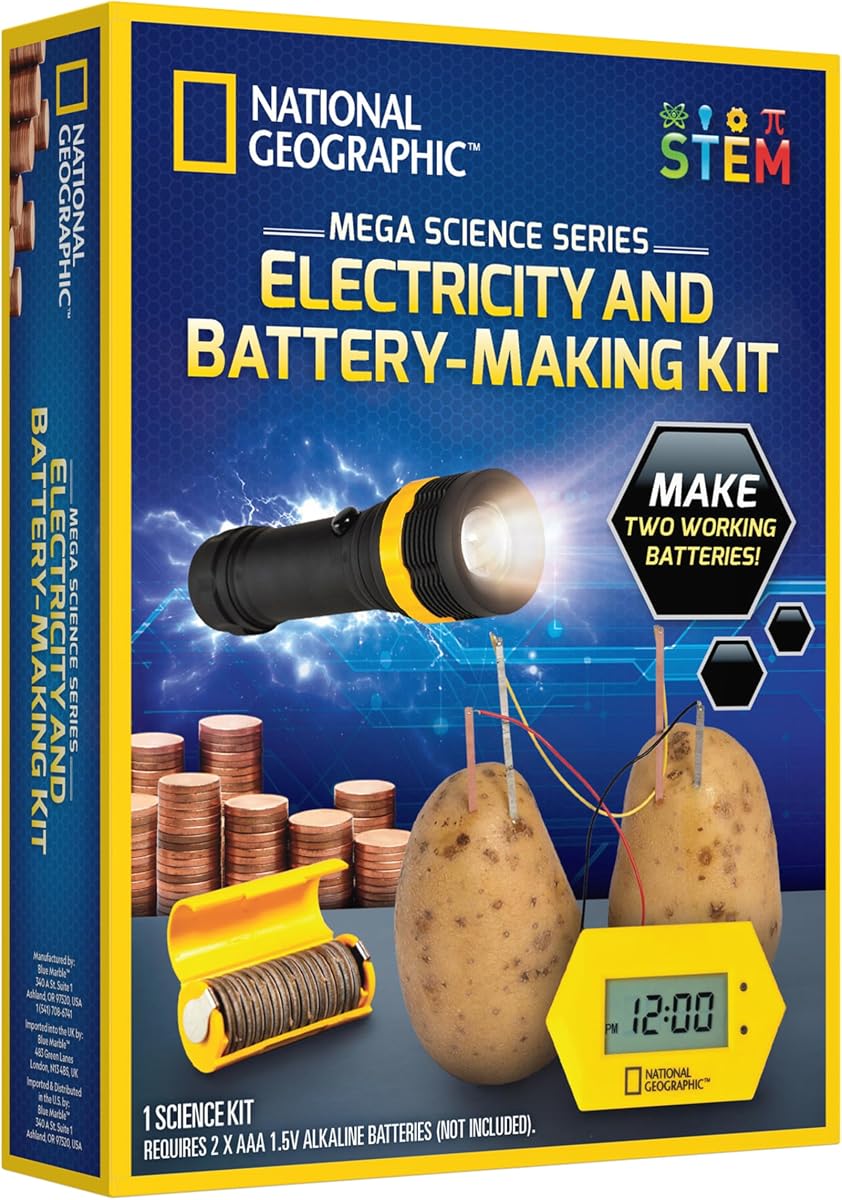
National Geographic Battery Making Science Kit with 2 STEM Projects
2 STEM projects
Potato clock
Coin flashlight
Learning guide
This kit focuses on creating batteries from everyday items. It includes a potato clock project using a voltmeter. The coin-powered flashlight adds a practical application for learning.
Pros
Fun potato battery
Coin flashlight
Easy start
Learning guide
Award winning
Cons
Small project count
Consumables used
We may earn a commission when you buy through this link, at no additional cost to you.
It offers astounding science experiments that are memorable. Kids learn why circuits work through construction. The guide provides fascinating insight into electrical engineering basics.
Project count is limited but depth is strong. Using potatoes as components means buying food items. This is a minor trade-off for the engaging nature of the activity.
Great for curious kids who love building. It is a perfect gift to inspire further interest in science and exploration.
Real World Power
Create power using real-world items like potatoes and coins.
Award Winning Brand
Trusted quality ensures safe and educational experiments.
The Upgrade kit expands on basic circuits with more applications. It supports grades 7 to 11 with projects like traffic lights. The transparent box makes finding parts easier.
Pros
Includes switches
Upgrade projects
Transparent box
Ready to use
Support
Cons
Requires batteries
Basic for some
We may earn a commission when you buy through this link, at no additional cost to you.
Includes items ready out of the box except batteries. You can build wind power cars and stair double switch circuits. The full-color manual helps teachers guide students.
It offers better variety than the Basic version. However, battery prep remains necessary for immediate use. After-sales service support is available for any issues.
Pick this if you need more project diversity. It balances simplicity with enough features for meaningful learning outcomes.
We may earn a commission when you buy through this link, at no additional cost to you.
Buying Guide – How to Choose the Best Electricity Learning Kits
Selecting the right kit depends on your child's age and interests. This section outlines key factors to evaluate for a successful learning experience.
Age Appropriateness
Always check the recommended age range. Younger kids need simple snap-on circuits while older students can handle complex soldering or tools.
Choose a kit matching your child's maturity to avoid frustration.
Project Variety
Look for kits offering diverse experiments like fruit batteries or electromagnets. Variety keeps interest high and covers broader physics principles.
A wider range ensures long-term educational value.
Component Safety
Safety is paramount. Ensure components are insulated and designed for hands-on use without sharp edges or high voltage risks.
Prioritize kits with clear safety warnings and durable materials.
Instruction Clarity
Clear manuals or video guides help kids learn independently. Look for full-color instructions with step-by-step diagrams and explanations.
Good resources reduce parent intervention and boost confidence.
Storage and Durability
Durable cases prevent parts from getting lost during storage. Kits with organized compartments simplify setup and cleanup after experiments.
Invest in sturdy packaging to protect your investment.
Educational Focus
Decide if you want a toy or a serious study tool. Some kits focus on fun while others teach principles like Ohm's law.
Align the focus with your academic goals.
Battery Requirements
Most kits require AA batteries which are rarely included. Check this detail to avoid delays when starting your first project.
Keep spare batteries on hand for uninterrupted learning.
Budget Considerations
Prices vary significantly. Basic kits cost less but offer fewer projects while premium sets provide advanced components and guides.
Balance cost with the depth of learning you want to provide.
How to Use and Care for Your Electricity Learning Kits
Start with the simplest projects to understand the basics. Follow instructions carefully before moving to advanced circuits to ensure safety and success.
Store components in their provided box after each session. This prevents lost parts and keeps the kit organized for future experiments.
Replace batteries when they run low to prevent heat buildup. Never mix old and new batteries to avoid potential safety issues.
Frequently Asked Questions
What age are electricity learning kits best for?
Most kits are designed for children aged 8 to 14. Younger kids need supervision for basic experiments. Older students can handle more complex physics concepts independently.
Do these kits include batteries?
Most electricity learning kits do not include batteries. You will need to purchase standard AA or AAA batteries separately. Always check the specific product details.
Are these kits safe for children?
Yes, these kits are designed with safety in mind. They use low voltage and insulated components. Adult supervision is recommended for younger children.
Can I use these for school projects?
These kits are perfect for school science projects. They offer hands-on learning that aligns with STEM curriculum. Teachers often use them for classroom demonstrations.
How many projects are included?
The number varies by kit. Some offer 8 experiments while others have over 120. Check the product specs for the exact project count before buying.
Are instructions easy to follow?
Most kits come with detailed manuals or video guides. The instructions are designed to be clear for kids. Look for kits with color diagrams for best results.
Final Thoughts on Choosing the Best Electricity Learning Kits
Choosing the right kit depends on your child's age and interests. The National Geographic kit leads in variety while the STEM kit offers great value for beginners.
Prioritize safety features and clear instructions to ensure a positive experience. Storage solutions also matter for keeping components organized over time.
Remember to check current prices and availability before buying. These details can change quickly, so verify listings to ensure you get the best deal.
This guide compares the best desoldering wick options for electronics repair. We review top picks based on copper quality, width variety, flux content, and