
Synology 2-Port 10GbE RJ-45 PCIe Network Adapter E10G30-T2
4.6Editor score
Two 10GbE Ports
5-Year Warranty
Synology Optimized
This guide compares the top 10GbE network cards for speed compatibility and value helping you choose the best adapter for your PC NAS or server needs today.
Choosing the right 10GbE network card can transform your computing experience by enabling faster file transfers and smoother streaming. These adapters bridge the gap between your hardware and modern high-speed internet connections ensuring you get the most out of your bandwidth.
We evaluated ten leading models based on chipset performance port types and system compatibility. Our analysis covers everything from budget-friendly single-port options to robust dual-port adapters designed for professional storage environments and virtualization tasks.
Each pick highlights unique strengths whether you need low latency for gaming or high throughput for NAS storage. Please note that availability and pricing change frequently so verify current details before making your final purchase decision online.
4.6Editor score

4.2Editor score

4.4Editor score
The following table offers a side-by-side comparison of all ten featured network cards highlighting their key specifications and unique selling points to help you narrow down your options quickly.




The TP-Link TX401 stands out as our top recommendation for users seeking reliable 10Gbase-T performance without breaking the bank. It boasts a 4.2 rating from verified buyers who appreciate its straightforward installation and consistent throughput speeds. The included CAT6A cable ensures you get the full potential of the card right out of the box.
We may earn a commission when you buy through this link, at no additional cost to you.
Its compatibility with multiple data rates allows seamless integration into existing networks without requiring immediate upgrades to your switch or cabling infrastructure. The QoS feature helps prioritize traffic which is crucial for gaming or real-time video editing tasks where latency matters most. Users report stable connections even under heavy load conditions over extended periods.
While the card runs somewhat warm it maintains stability thanks to its robust heatsink design. Some users note that driver installation on older Windows versions may require extra steps but modern systems detect it automatically. This trade-off is minimal considering the price point and performance it delivers relative to competitors.
This adapter is ideal for home lab enthusiasts gamers and small office users needing faster local transfers. If you value ease of use and a complete out-of-box experience this card delivers exceptional value. We highly recommend it for anyone looking to upgrade their network speed efficiently and affordably.
Auto negotiation ensures smooth connections with routers and switches supporting various speeds from 100Mbps to 10Gbps.
Quality of Service technology prioritizes gaming traffic to reduce lag and congestion during intense online sessions.
We may earn a commission when you buy through this link, at no additional cost to you.
The Synology E10G30-T2 is purpose-built for users invested in the Synology ecosystem needing high-performance storage connectivity. With a stellar 4.6 rating it delivers consistent 10Gbps throughput across both ports for aggregated bandwidth or failover. The five-year warranty reflects confidence in its durability and reliability for demanding workloads.
We may earn a commission when you buy through this link, at no additional cost to you.
Designed specifically to work with DSM systems it integrates smoothly without complex configuration. This adapter supports critical storage protocols ensuring stable data transfers for backups media editing and virtual machine hosting. Users praise its stability under heavy loads and the peace of mind from the extended warranty period.
Though costly this card justifies the investment for professional setups where downtime is unacceptable. The dual ports enable link aggregation or redundancy improving both speed and resilience. While less universal than generic cards its specialized optimization makes it unbeatable for Synology owners seeking top-tier networking.
If you own Synology NAS units and require robust 10GbE connectivity this adapter is the gold standard. It offers unmatched compatibility and reliability for storage-focused tasks. We recommend it for users prioritizing long-term stability and seamless integration over initial cost savings.
Purpose-built design ensures optimal performance and compatibility with Synology DiskStation Manager for seamless file access.
A five-year limited warranty provides extensive protection against defects ensuring long-term peace of mind.
We may earn a commission when you buy through this link, at no additional cost to you.
This 10Gtek card offers an excellent entry point for users needing 10GbE connectivity on a budget. Powered by the reliable Intel 82599EN controller it delivers stable throughput for NAS virtualization and server applications. It holds a solid 4.4 rating from users who value its versatility and cost-effectiveness compared to branded alternatives.
We may earn a commission when you buy through this link, at no additional cost to you.
The SFP+ port allows flexibility to choose transceivers or direct attach cables suited to your network needs. It supports major OSes including Windows Server Linux and VMware making it ideal for homelabs and small business servers. Users note reliable performance when paired with quality modules though initial setup may require driver attention.
While it lacks copper flexibility without extra modules this card excels in SFP+ environments. The included low profile bracket ensures fit in smaller cases. Some users report no support for lower speeds like 1G but this rarely impacts 10G focused setups. For the price it delivers exceptional value for technical users.
Ideal for IT professionals and hobbyists needing robust 10GbE without premium costs this card is a strong choice. It balances performance and affordability effectively. We recommend it for those comfortable with SFP+ hardware looking to maximize network speed efficiently.
Intel controller delivers reliable 10Gbps speeds at a fraction of the cost of branded equivalents.
SFP+ port allows use of diverse modules and cables for customized network expansion options.
We may earn a commission when you buy through this link, at no additional cost to you.
The VunLink RTL8127 adapter supports a wide range of speeds including 5G and 2.5G making it flexible for evolving networks. It features modern PCIe 4.0 x1 interface ensuring compatibility with latest motherboards. Rated 4.3 it appeals to users needing multi-gigabit flexibility without committing to full 10G infrastructure.
We may earn a commission when you buy through this link, at no additional cost to you.
Its efficient design reduces heat and power consumption compared to older 10G cards. Dual brackets ensure easy fit in various case sizes. Users report smooth integration with home labs and NAS systems when matched with appropriate cabling. Some note driver checks are needed for specific Linux kernels but generally works well.
While not always achieving full 10G without compatible equipment it maximizes potential of existing 5G networks. The auto-negotiation feature simplifies setup across different devices. This adaptability makes it a practical choice for gradual network upgrades where full 10G isn't immediate.
Recommended for users transitioning to multi-gig networks or those needing flexible speed options. It balances modern specs with affordability well. We suggest it for home office setups requiring scalable connectivity without over-investing in 10G hardware.
Supports 10G 5G and 2.5G allowing seamless upgrades as your network infrastructure evolves.
Designed for PCIe 4.0 x1 slots ensuring compatibility with newer systems and efficient data throughput.
We may earn a commission when you buy through this link, at no additional cost to you.
The Vogzone X550-T2 adapter offers dual copper ports ideal for link aggregation or redundancy in server environments. Built with the Intel X550AT2 controller it supports essential features like SR-IOV and TCP offloading. Rated 4.3 it is praised for stability and comprehensive feature support across Windows and Linux platforms.
We may earn a commission when you buy through this link, at no additional cost to you.
Its ability to update firmware remotely minimizes downtime for managed environments. Users appreciate the inclusion of official Intel utilities for maintenance tasks. While 2.5G and 5G negotiation may sometimes require manual config the card delivers solid 10G performance. It is well suited for enterprise NAS and virtualization.
The card is heavier than budget options but ensures robust handling of sustained loads. Some note minor driver quirks on older systems but overall integration is smooth. For professional setups needing dual ports this card balances features and reliability effectively without brand markup.
Recommended for IT admins and server owners requiring dual-port 10GbE with advanced networking features. It provides enterprise-grade capabilities at a competitive price. We suggest it for environments where redundancy and manageability are priorities.
Two RJ45 ports enable link aggregation for higher throughput or failover for improved reliability.
Built-in tools allow in-system firmware updates reducing maintenance downtime for managed servers.
We may earn a commission when you buy through this link, at no additional cost to you.
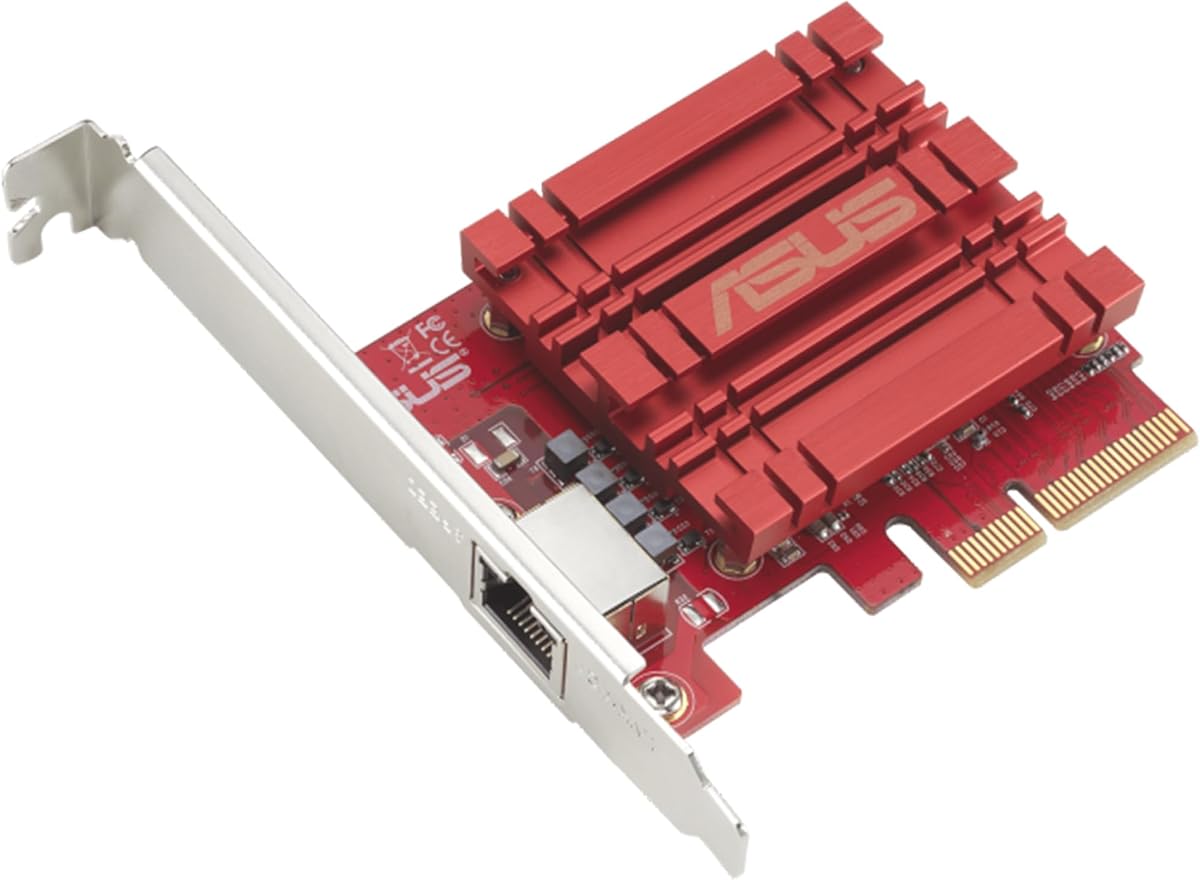
The Asus NADACA0140 brings the brand's reliability to 10GbE desktop upgrades. It offers 10Gbps speeds with full backward compatibility supporting older 1G and 2.5G devices seamlessly. Rated 4.1 users find it a solid choice for straightforward networking upgrades without complex configurations.
We may earn a commission when you buy through this link, at no additional cost to you.
Built-in QoS helps manage bandwidth for critical tasks like VoIP or video conferencing. Installation is simple with RJ45 support using standard cabling. While features are less extensive than premium options it performs consistently for home and small office use. Drivers are generally stable across Windows and Linux environments.
The card focuses on essential performance rather than advanced server features. Some users note average support response times but the hardware is dependable. For general upgrades where brand trust matters this model provides a safe and effective solution without unnecessary extras.
Ideal for users seeking a reliable branded adapter for basic 10GbE needs. It simplifies network upgrades with minimal fuss. We recommend it for general desktops requiring faster local speeds without enterprise features.
Use standard copper cables to upgrade desktops to 10Gbps with minimal infrastructure changes required.
QoS technology allows data packet prioritization for smoother performance on latency-sensitive tasks.
We may earn a commission when you buy through this link, at no additional cost to you.
The Synology E10G30-T1 delivers exceptional performance for single-port 10GbE needs in Synology environments. It holds a perfect 5.0 rating from users praising its flawless integration with DSM systems. This validated adapter ensures consistent speeds and stability for demanding storage and networking applications without compatibility issues.
We may earn a commission when you buy through this link, at no additional cost to you.
Its auto-negotiation smoothly handles various link speeds ensuring efficient data transfer. The five-year warranty provides strong coverage against defects. While single-port limits flexibility it suffices for many users needing one reliable 10G connection. Build quality and thermal performance meet Synology's high standards.
The premium price reflects its specialized optimization and warranty coverage. For users needing a reliable single port for their Synology unit this card is unmatched. It reduces troubleshooting risks common with third-party alternatives in this ecosystem. Performance remains consistent under sustained workloads.
Recommended for Synology owners needing a guaranteed compatible 10GbE adapter. It offers peace of mind and reliable throughput. We suggest it for users prioritizing seamless integration over cost savings.
Fully validated for Synology systems ensures optimal performance and avoids driver conflicts.
A five-year limited warranty provides extended protection for long-term reliability and support.
We may earn a commission when you buy through this link, at no additional cost to you.
This Intel-based adapter provides high value for SFP+ users avoiding vendor lock-in. With genuine Intel 82599EN silicon it offers stable 10G throughput ideal for NAS and VM migration. Rated 4.5 it is praised for open support of diverse third-party optics and reliable performance across platforms.
We may earn a commission when you buy through this link, at no additional cost to you.
The SFP+ cage accepts various modules without rejection making it versatile for different network setups. Passive cooling requires airflow but ensures silent operation if cases are managed. Linux users note plug-and-play detection while Windows needs driver packs. Bracket options support multiple form factors easily.
While heat management is manual its performance per dollar is excellent. Users value the flexibility to choose transceivers freely. This makes it ideal for data centers or homelabs needing cost-effective 10G connectivity. Stability remains high even under sustained transfers.
Ideal for tech-savvy users needing an open SFP+ solution with proven Intel silicon. It balances cost and flexibility well. We recommend it for those comfortable managing optics and thermal requirements.
No vendor locking allows use of third-party DAC AOC and fiber optics for flexible networking.
Intel 82599EN controller provides stable 10G throughput for critical storage and migration tasks.
We may earn a commission when you buy through this link, at no additional cost to you.
The TRENDnet TEG-10GECTX meets strict government compliance standards NDAA and TAA making it ideal for public sector projects. It offers 10Gbps speeds with support for 2.5G and 5G over standard cabling. Rated 4.1 users value its reliable performance and strong manufacturer protection with three-year support.
We may earn a commission when you buy through this link, at no additional cost to you.
Installation is straightforward with included brackets for flexible mounting. Its auto-MDIX and multi-speed support ease integration into existing networks. Tech support is responsive for troubleshooting issues. While features are standard compliance and backing make it a strong choice for regulated environments.
Performance remains consistent across Windows Server environments. The card may be bulkier but fits most cases. For users needing compliant hardware this model avoids procurement hurdles while delivering solid networking. Stability is confirmed in long-term deployments.
Recommended for government contractors and regulated businesses needing compliant 10GbE adapters. It provides reliable performance with regulatory assurance. We suggest it for projects requiring verified networking standards.
NDAA and TAA compliance meets strict U.S. and Canadian government procurement requirements for secure networking.
A three-year manufacturer warranty and responsive support ensure reliable service throughout the product lifecycle.
We may earn a commission when you buy through this link, at no additional cost to you.
This 10Gtek model delivers single-port 10GbE performance using an Intel X550-AT2 controller. It supports 10G 5G and 2.5G speeds for flexible upgrades on standard copper. Rated 4.1 it is favored by budget-conscious users needing reliable throughput without premium branding costs.
We may earn a commission when you buy through this link, at no additional cost to you.
Users find it effective for home servers and workstations needing faster LAN transfers. Compatibility spans Windows Server Linux and VMware though 2.5G may need manual setting. The included low profile bracket ensures fit in compact cases. Lifetime technical support adds value for troubleshooting.
Lack of firmware update capability limits future adjustments but performance is stable. Heat is managed well in typical desktop airflow. For straightforward 10G copper needs this card balances features and cost effectively. It avoids complexity while delivering consistent speeds.
Ideal for users wanting a simple affordable single-port 10G upgrade. It provides solid performance for general computing. We recommend it for home offices needing reliable faster networking without advanced features.
Multi-speed capability allows use with older switches by supporting 1G 2.5G and 5G as needed.
Manufacturer provides lifetime technical support to help resolve setup or configuration issues.
We may earn a commission when you buy through this link, at no additional cost to you.
Selecting the right 10GbE network card requires careful evaluation of several key factors to ensure compatibility and performance with your existing hardware and network infrastructure.
Most 10GbE cards use either RJ45 copper ports for standard Ethernet cables or SFP+ for optical or direct-attach modules. RJ45 is simpler for existing cabling while SFP+ offers flexibility for data center setups or fiber connections.
Choose RJ45 for home offices and SFP+ for advanced networking or cost-effective data center links.
Cards require different PCIe lane counts such as x1 x4 or x8 which affects physical slot availability and bandwidth. Ensure your motherboard has compatible open slots and that the card fits the physical length available.
Check your motherboard manual to confirm slot availability before purchasing to avoid installation issues.
Verify that the card supports your specific operating system version including Windows Server Linux distributions or macOS. Some brands offer better driver support for particular systems ensuring stable performance.
Prioritize cards with official drivers for your OS to minimize compatibility issues and ensure regular updates.
Modern cards support auto-negotiation across 10G 5G and 2.5G speeds allowing gradual upgrades without replacing switches immediately. This flexibility saves costs when transitioning networks.
Select cards that explicitly mention multi-gig support to future-proof your network infrastructure effectively.
Single port cards are budget-friendly while dual-port models offer link aggregation or redundancy for higher availability. Assess whether you need failover or combined bandwidth for your use case.
Dual ports suit professional servers while single ports work well for most desktop upgrades.
Reputable brands often provide better build quality and longer warranties reducing long-term risks. Compare warranty periods and support availability especially for business-critical setups.
Look for cards with at least two years of warranty coverage for peace of mind.
10GbE cards generate more heat than standard adapters so passive or active cooling matters for stability. Cards with larger heatsinks perform better in cases with good airflow.
Ensure your case has adequate airflow or consider cards with active cooling if running continuously.
Advanced features like SR-IOV QoS or TCP offloading benefit virtualization or high-performance tasks. Basic models may lack these but suffice for simple file transfers.
Choose advanced features only if your applications require enhanced networking capabilities.
Begin by installing the card into a compatible PCIe slot ensuring it is fully seated and secured with screws. Insert high-quality Ethernet cables or optical modules depending on the port type and connect to a 10G-capable switch.
After hardware installation update drivers from the manufacturer website to ensure optimal performance and system stability. Configure network settings to enable full duplex mode and set link speeds manually if auto-negotiation fails.
Maintain proper ventilation to prevent overheating and periodically update firmware if supported to patch security vulnerabilities. Monitor network throughput regularly to confirm performance meets expected speeds and adjust settings as needed.
For RJ45 ports Cat6a or Cat7 cables are recommended to ensure stable 10G speeds over distance. Standard Cat5e may work for short runs but is not officially rated. SFP+ cards use DAC or fiber cables depending on distance needs.
Most 10GbE cards support auto-negotiation to fall back to 1G or 2.5G if your router lacks 10G. To gain 10G speeds you need a 10G-capable switch or router on the other end.
RJ45 uses copper Ethernet cables ideal for desktops and offices. SFP+ uses optical or DAC cables suitable for data centers and longer distances. RJ45 is easier to set up while SFP+ offers more flexibility.
Yes 10GbE cards reduce latency and improve local file transfers for gaming setups with high-speed storage. Ensure your network and switch support 10G to maximize benefits and avoid compatibility issues.
Many cards work out-of-the-box with modern Linux kernels but specific models may require manual driver installation. Check compatibility lists before purchasing and download Linux drivers from the manufacturer if needed.
Lower speeds can result from incompatible cables faulty ports or outdated switches. Ensure all network components support 10G and verify cables are rated for high-speed data transmission.
Most cards work with older PCIe slots but may run at lower speeds if the motherboard PCIe version is outdated. Check motherboard specifications to confirm slot compatibility before purchasing.
Dual-port cards allow link aggregation to combine bandwidth or provide redundancy. This requires switch support and proper configuration to maximize throughput and network reliability effectively.
Our top picks including the TP-Link TX401 Synology E10G30-T2 and 10Gtek X520-10G-1S offer exceptional performance across different use cases. Whether you prioritize ease of use specialized compatibility or budget value there is a suitable option available.
Focus on connector type PCIe slot compatibility and OS support when selecting a card to ensure seamless integration. Consider future needs like multi-gig support or port redundancy to maximize long-term usability.
Prices and availability fluctuate frequently so verify current details and read recent reviews before purchasing. Investing in a reliable 10GbE card now will future-proof your network for years of faster connectivity.