
CCTV Camera Tester 7 Inch IPS
4.1Editor score
1920×1200 Resolution
7000mAh Battery Capacity
Supports 6K 32MP Cameras
Selecting the right IP and CCTV camera tester is crucial for security installers and network technicians. These devices streamline the process of configuring cameras, verifying network connectivity, and ensuring power stability across diverse surveillance setups effectively.
We evaluated ten leading testers based on screen quality, power output capabilities, and network diagnostic tools. Each product was assessed for its ability to handle modern high-resolution feeds and legacy analog systems with equal precision and reliability.
Each pick highlights key strengths and potential limitations to help you choose wisely. Note that prices and availability fluctuate frequently, so verify current details on the retailer site before finalizing your purchase decision today.
4.1Editor score

4.9Editor score

4.5Editor score
As an Amazon Associate we earn from qualifying purchases.
The following table provides a quick side-by-side view of essential specifications for each model. This comparison helps you identify differences in screen size, power output, and supported camera formats at a glance.




The Rsrteng Model E88 stands out as the top choice for professional installers needing robust power and display capabilities. With a stellar 4.9 rating, it delivers exceptional reliability for testing 4K feeds and high-power PTZ cameras without compromise.
We may earn a commission when you buy through this link, at no additional cost to you.
Its standout features include a massive 90W PoE++ output and a crisp 1920×1200 display on an 8-inch touchscreen. The inclusion of a Gigabit SFP module ensures seamless integration with fiber optic networks, making it ideal for large-scale enterprise installations.
While it carries a higher price and is heavier than basic units, the trade-off is justified by its comprehensive feature set. The Android 10 system allows for easy app updates, ensuring your toolkit stays current with evolving security standards over time.
This unit is perfect for technicians who manage diverse systems and require a single device to handle everything from analog checks to complex IP network diagnostics efficiently.
The 90W PoE output powers high-demand PTZ cameras directly while the SFP module handles fiber optic testing for advanced network setups.
An 8-inch high-resolution screen provides clear visibility of feeds even in bright outdoor conditions, reducing eye strain during long shifts.
We may earn a commission when you buy through this link, at no additional cost to you.
The RAINLEOTI 7-inch IPS tester offers an accessible entry point for budget-conscious installers without sacrificing screen quality. With a 4.1 rating, it balances cost and functionality effectively for standard residential and small commercial projects.
We may earn a commission when you buy through this link, at no additional cost to you.
Its 1920×1200 resolution on a 7-inch touch panel ensures sharp image clarity, while the 7000mAh battery supports extended work sessions. The HDMI output adds versatility for mirroring feeds to larger displays during client presentations or meetings.
However, users should note it supports CVBS analog rather than HD coaxial formats like AHD or TVI. This limitation restricts its use with newer analog high-def cameras, so verify your equipment compatibility before purchasing for mixed systems.
Choose this model if you need a reliable, high-res display for IP and basic analog testing while keeping costs low for routine maintenance and setup tasks.
A massive 7000mAh battery and 1080p-equivalent screen allow for long shifts without recharging and clear visuals for precise adjustments.
It is designed specifically for CVBS analog systems, so ensure your legacy cameras match this standard before purchase.
We may earn a commission when you buy through this link, at no additional cost to you.
The NOYAFA NF-IPC728HSO earns the premium spot by integrating specialized fiber optic tools into a standard CCTV tester. With a 4.5 rating, it caters to advanced integrators who need to manage both copper and fiber networks simultaneously.
We may earn a commission when you buy through this link, at no additional cost to you.
It supports true 8K 32MP video and includes a 7-wavelength optical power meter and visual fault locator. These features allow technicians to diagnose fiber breaks and signal loss directly from the device, eliminating the need for separate tools.
While it comes with a higher price and requires more technical knowledge to use effectively, it saves time by consolidating hardware. The built-in cable tracer further aids in identifying lines in cluttered bundles or wall cavities.
Invest in this unit if your work frequently involves fiber optic backbones and you require a single device that covers both power and fiber diagnostics efficiently.
Built-in OPM and VFL tools allow for precise measurement of light loss and detection of breaks in fiber lines.
The 8-inch Full HD screen offers ample space to view 8K streams, ensuring details are visible even on ultra-high-resolution cameras.
We may earn a commission when you buy through this link, at no additional cost to you.
The WANLUTECH E88 is a formidable competitor to the Rsrteng model, sharing many core features like 90W PoE and SFP support. Rated 4.4, it excels in handling high-power devices and fiber connections for complex network environments.
We may earn a commission when you buy through this link, at no additional cost to you.
Its 8-inch touchscreen supports Android, allowing for flexible app use and customization. The inclusion of a VGA input adds versatility for connecting older video sources that might not have HDMI ports available on-site.
A key note is the initial battery protection paper that must be removed before use, which might trip up some users initially. Otherwise, its performance matches high-end models at a competitive price point for professionals.
Buy this if you want robust fiber and PoE capabilities in a versatile package without paying top-tier premium prices for specialized branding.
Support for VGA input alongside HDMI makes it adaptable to a wider range of legacy and modern video sources.
Ensure you remove the battery isolation paper before first use to prevent startup issues.
We may earn a commission when you buy through this link, at no additional cost to you.
The Rsrteng IPC-9800ADHS Pro brings high-end specs like 8K support and Android 11 to a 7-inch form factor. With a 4.5 rating, it is powerful enough for large enterprise deployments that need extensive compatibility across various camera brands.
We may earn a commission when you buy through this link, at no additional cost to you.
Its ability to handle 8K video and support for 90W PoE ensures it can test almost any camera on the market. The SFP module and dual Ethernet ports allow for testing on high-speed networks without bottlenecks.
The interface can be complex for new users due to the extensive feature set. Additionally, battery life may vary depending on screen brightness and active network scanning, so bringing a spare charger is wise.
Select this model if you need the latest OS and high-resolution testing capabilities in a portable device for demanding enterprise projects.
Android 11 provides a modern interface and support for installing additional diagnostic apps from app stores.
Dual Gigabit ports and SFP support ensure that testing bandwidth does not become a bottleneck for high-speed networks.
We may earn a commission when you buy through this link, at no additional cost to you.
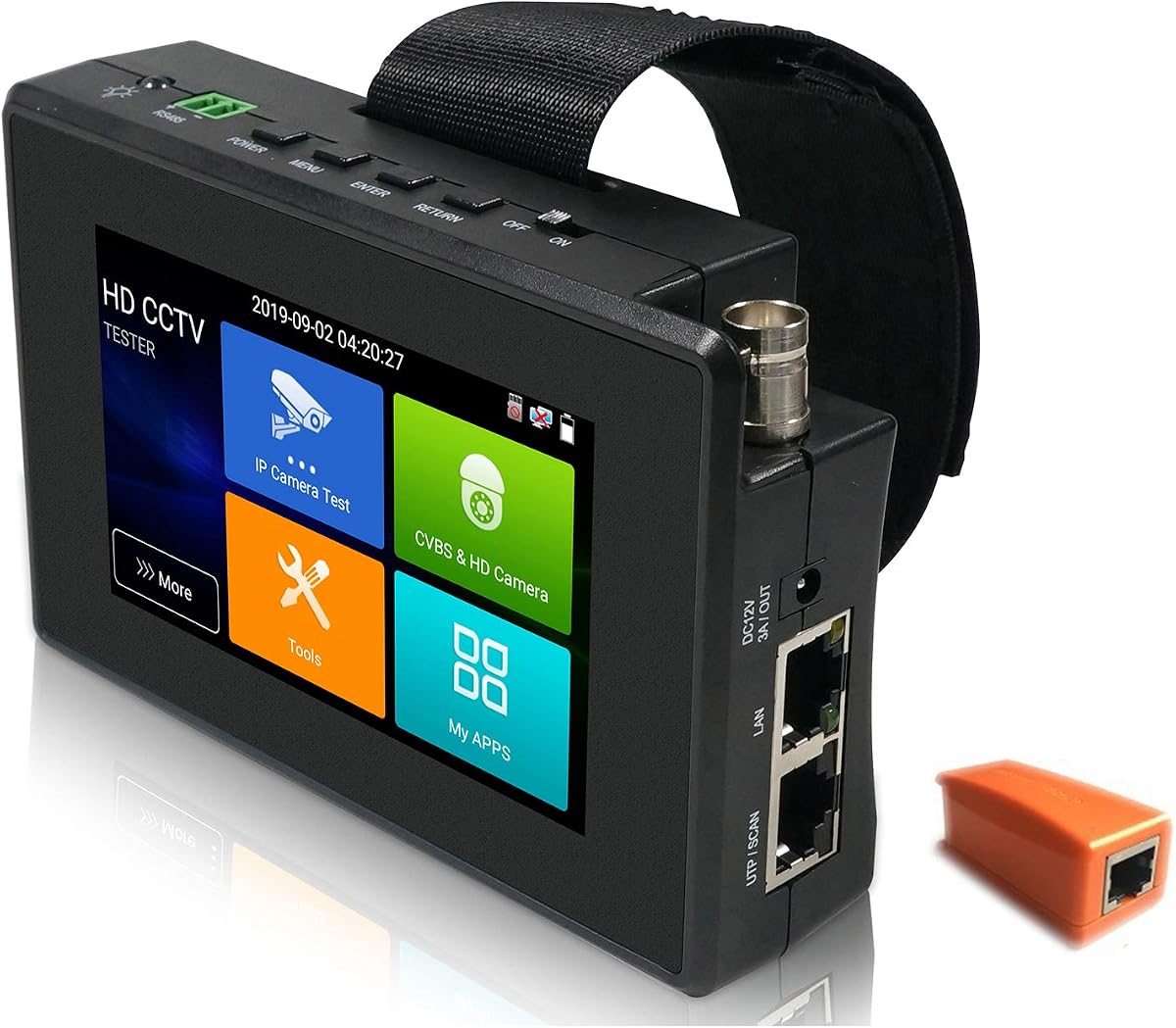
The WANLUTECH IPC-1800 is an excellent compact option for technicians who prioritize portability without losing core functionality. Rated 4.4, it fits easily into a tool bag while supporting 4K IP and 8MP analog camera testing effectively.
We may earn a commission when you buy through this link, at no additional cost to you.
Its 4-inch screen is bright enough for quick checks, and the 30W PoE output handles most standard cameras. The built-in WiFi hotspot allows for wireless connection testing without needing an external router at the site.
While the smaller screen may limit detailed visual inspection, it is sufficient for functional testing and configuration. The lower wattage means it may not power high-end PTZs that require 60W or 90W inputs.
Pick this unit for rapid residential install or maintenance where portability is key and standard camera power needs are expected.
The compact design reduces bulk in your gear bag, allowing for faster movement between multiple installation sites.
The WiFi hotspot feature enables quick network connectivity checks without relying on external infrastructure.
We may earn a commission when you buy through this link, at no additional cost to you.
The EVERSECU 5 in 1 tester is designed for simplicity and ease of use. With a 4.4 rating, it is ideal for beginners or smaller setups where complex diagnostics are not required daily.
We may earn a commission when you buy through this link, at no additional cost to you.
Its 4-inch touchscreen supports standard HD resolutions and includes a unique 180-degree screen rotation feature. This allows for easier cable management when connecting LAN ports at the bottom of the device.
While it lacks advanced fiber tools or high-wattage outputs, it covers the basics well for IP and analog testing. The interface is customizable, helping users tailor the screen to their preferred workflow.
Choose this if you want a straightforward device for basic configuration and power supply without navigating complex menus.
The screen rotation feature helps reduce awkward angles when plugging in cables at the bottom of the unit.
Customizable icons and backgrounds allow users to personalize the interface for faster access to favorite tools.
We may earn a commission when you buy through this link, at no additional cost to you.
The EVERSECU 7-inch model adds unique value with video recording and a digital multimeter. Rated 4.4, it provides a broader utility scope for technicians who need to document issues and check electrical levels simultaneously.
We may earn a commission when you buy through this link, at no additional cost to you.
Its large 7-inch display supports 8K IP feeds, offering clear visuals for detailed inspection. The multimeter function eliminates the need to carry a separate device for quick voltage checks at the camera end.
Battery life may be shorter due to the added functions and display brightness. Additionally, the device is heavier, which might be a factor for those walking long distances during a day.
Opt for this if you need to document video evidence and check voltage without carrying extra gear in your toolkit.
The ability to record video allows you to capture issues for later review or client presentation without external equipment.
Including a multimeter reduces the load in your bag by combining testing tools into one reliable unit.
We may earn a commission when you buy through this link, at no additional cost to you.
The Rsrteng E88 delivers professional-grade features with a focus on power and network diagnostics. Rated 4.9, it is a top choice for large installations where reliable power delivery is critical for PTZ dome cameras.
We may earn a commission when you buy through this link, at no additional cost to you.
Its WiFi analyzer helps monitor signal strength and channel occupancy, which is vital for wireless camera setups. The large screen and SFP support make it versatile for both wired and wireless environments.
The unit is quite large and heavy, making it less ideal for solo residential work. However, for team-based large projects, its stability and power capabilities are invaluable.
Select this if you need a stable, high-power device for complex enterprise networks and PTZ systems.
The built-in WiFi analyzer helps you optimize signal strength for wireless cameras in the field.
Real-time monitoring of PoE output ensures you can verify power delivery without additional meters.
We may earn a commission when you buy through this link, at no additional cost to you.
The TREND Networks SecuriTEST IP is tailored for large enterprise deployments that require detailed documentation. While rated 3.9 due to price, it excels in generating professional reports with screenshots for project verification.
We may earn a commission when you buy through this link, at no additional cost to you.
Its QuickIP feature simplifies configuration, making it easier to manage many devices efficiently. The internal Li-Ion battery supports long workdays without needing external power sources frequently.
The high cost and specialized interface make it best suited for corporate or government projects rather than general residential work. It streamlines administrative tasks significantly compared to simpler testers.
Choose this if you need official documentation and streamlined reporting for large-scale professional installations.
The ability to generate reports with screenshots helps reduce callbacks and provides proof of successful installation.
Designed for high-volume environments, it prioritizes efficiency and reporting over basic consumer features.
We may earn a commission when you buy through this link, at no additional cost to you.
Selecting the right tester involves balancing screen size, power output, and connectivity options. This guide breaks down the most critical factors to consider before making a purchase.
A larger screen like 8 inches provides better visibility of fine details in high-resolution feeds. Look for resolutions of at least 1920×1200 to ensure clarity in bright outdoor conditions.
Prioritize high-resolution screens for better accuracy when adjusting PTZ settings or checking image quality.
High-power PTZ cameras often require 60W or 90W outputs rather than standard 30W. Ensure the tester supports PoE++ standards to power these devices directly without extra injectors.
Check the wattage rating carefully to match the needs of your specific camera hardware.
Verify whether the tester supports CVBS, AHD, TVI, or CVI formats. Some budget units only support basic CVBS while others handle HD coaxial signals up to 8MP.
Match the analog support to your existing camera fleet to avoid compatibility issues during maintenance.
Effective testers include features like Ping, IP scans, and cable TDR tests. These tools help quickly identify connectivity issues and cable faults without needing separate devices.
Look for a comprehensive suite of network tools to streamline troubleshooting workflows.
Long workdays require a robust battery, ideally 7000mAh or more. A larger battery ensures you can test multiple cameras without needing frequent recharges.
Prioritize units with high battery capacity for extended field use.
Android-based testers allow for app customization and easier updates compared to closed systems. This flexibility helps future-proof your investment as security standards evolve.
Choose an open OS for better adaptability and long-term usability.
If your project involves fiber optic connections, look for an SFP module slot. Some models include OPM and VFL tools to test fiber signal directly.
Invest in fiber support if you manage mixed copper and fiber networks.
Professional models offer automated report generation with screenshots. This feature saves time on documentation and provides clear proof of successful installations for clients.
Consider reporting tools if you work on projects requiring formal verification.
Begin by removing any battery isolation paper before first use to ensure the device powers on correctly. Connect the Ethernet cable to the camera and the tester to verify network link status.
Use the Auto Discovery feature to scan for cameras on the local subnet quickly. Adjust the device IP to match the camera range if they are on different subnets for successful viewing.
Keep the screen clean and protected from direct sun exposure during operation. Store the unit in a protective case to prevent damage to ports and the display during transport.
CVBS is the traditional analog standard used for older cameras, while HD coaxial formats like AHD and TVI support higher resolutions. Ensure your tester explicitly lists support for these modern formats if you use them.
SFP modules allow the tester to connect to fiber optic networks directly. This is crucial for testing cameras connected via fiber backbones rather than standard copper Ethernet cables.
Only models with PoE++ support can deliver the necessary 60W to 90W. Standard testers with 30W output may fail to power large PTZs adequately.
Most modern testers run on Android and allow app updates via the Play Store or by downloading files to an SD card. Check the manufacturer's guide for specific update procedures.
Yes, built-in WiFi allows you to connect to local wireless networks to test IP cameras. It can also act as a hotspot for mobile device access in the field.
Time Domain Reflectometry helps measure cable length and detect faults like shorts or opens. It is an essential tool for verifying the integrity of long network runs.
Some advanced testers include a digital multimeter for checking voltage at the camera end. This feature eliminates the need to carry a separate tool for basic electrical checks.
They include features like automated reporting and enhanced stability for large deployments. These advanced features justify the higher cost in professional environments.
The Rsrteng E88, RAINLEOTI 7-inch IPS, and NOYAFA NF-IPC728HSO stand out as top performers for different needs. Each offers unique strengths in power, budget, and fiber optic capabilities.
Prioritize PoE wattage and screen quality if you work with PTZ and high-res cameras. For fiber networks, ensure SFP support is included in your final choice.
Always verify current specifications and prices on the retailer site before purchasing to ensure the device meets your current project requirements accurately.